The housing market is seeing a big rise in tiny homes and small homes. More people are choosing a minimalist lifestyle. In the US, prefab homes are becoming more popular due to the housing shortage and environmental worries. Even Elon Musk, with his companies Tesla, SpaceX, and Twitter, lives in a small prefab home at SpaceX in Boca Chica, Texas.
While the small home movement is very appealing, it’s key for those looking to buy a home to decide between a “tiny home” and a “small home”.
Key Takeaways
- Tiny homes are usually 100-250 square feet and cost between $15,000 to $60,000.
- Small homes are 900 to 1,200 square feet and can range from $25,000 to over $100,000.
- Small homes have more space than tiny homes, with big bathrooms and kitchens.
- Small homes made with eco-friendly SIPs are very energy efficient and have a lower carbon footprint.
- Small homes are easier to sell than tiny homes, which lose value over time.
Understanding Tiny and Small Homes
Efficient and compact living spaces are offered by tiny homes and small homes. Let’s explore the main differences between these two options.
What are “Tiny” Homes?
Tiny homes are usually under 400 square feet, with most between 100-250 square feet. They can be custom-built or prefabricated in a factory. Many tiny homes are on trailers, making them easy to move.
These homes have very small spaces, needing creative ways to store things and use furniture. The price of a tiny home varies a lot, from $15,000 to $60,000. This depends on size, materials, design, and features.
What are “Small” Homes?
A small home in the U.S. is about 900 to 1,200 square feet, bigger than a tiny home. Small homes are often prefabricated and have solid foundations. They can be on various foundations like slabs or basements.
Small homes come in different designs and sizes to fit the homeowner’s needs. Their cost can range from $25,000 to over $100,000, based on the features included.
Advantages and Disadvantages of tiny homes vs small homes
Choosing between a tiny home and a small home has its pros and cons. Tiny homes are known for being affordable, eco-friendly, and easy to move. Small homes offer more space and comfort. Knowing the differences can help you pick the best fit for your life.
Tiny homes are a budget-friendly choice. They cost less than traditional houses, making them great for singles or couples starting out. They also save money on utilities because they use less energy for heating and cooling. Plus, you spend less on furniture since everything has to be multi-purpose.
Another plus of tiny homes is their flexibility. Owners can take their homes on the road, living a more adventurous life. Tiny homes are also better for the planet, offering the chance to live off the grid for those who want to.
| Advantages of Tiny Homes | Advantages of Small Homes |
|---|---|
| More affordable | Greater living space and comfort |
| Lower utility costs | Fully functional kitchens and bathrooms |
| Increased mobility and flexibility | Easier to resell due to broader appeal |
| Smaller environmental footprint | Safer and more durable construction |
Small homes, on the other hand, offer more room and comfort. They have big bathrooms and kitchens, unlike tiny homes. Small homes are also safer and last longer because they’re built to stay put. They’re also easier to sell than tiny homes.
The decision between a tiny home and a small home depends on what you value most. Do you want to save money, live sustainably, or have lots of space? Both options have their pros and cons.
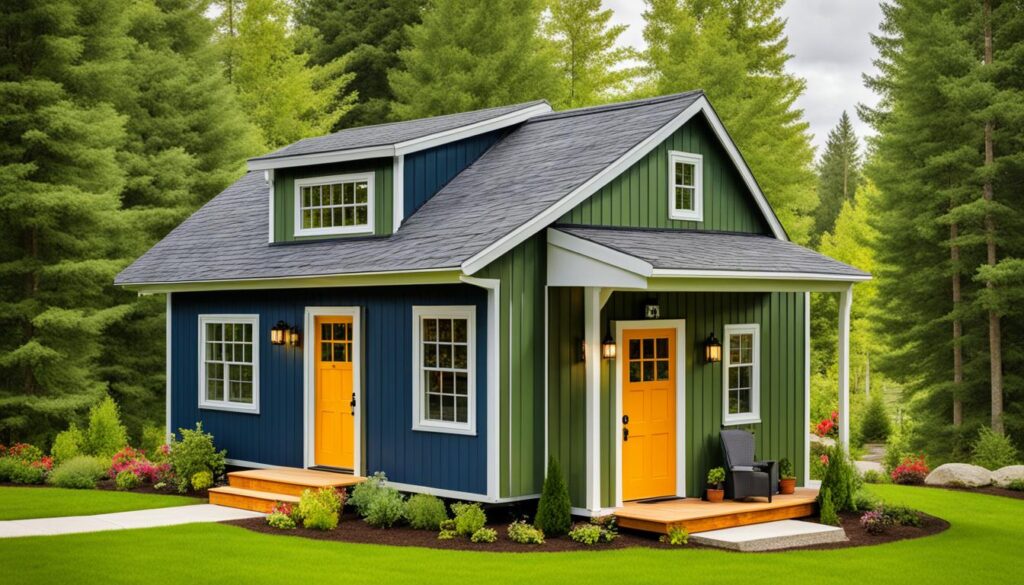
“Tiny house living fosters a close-knit community among tiny homeowners, providing opportunities for connections and shared experiences within the community.”
Conclusion
Choosing between a tiny home and a small home depends on your needs, budget, and lifestyle. Tiny homes offer a minimalist and mobile lifestyle, but they come with hidden costs. These include trouble getting financing, reselling, and keeping enough living space.
Small homes give you a traditional living feel with benefits like being sustainable, affordable, and customizable. Knowing the differences between tiny and small homes helps you make a choice that fits your future housing needs and lifestyle.
Whether you pick a tiny home or a small home, aim to find a place that lets you live well financially, environmentally, and personally. By thinking about the tiny home vs small home conclusion and choosing between tiny home and small home, you can start a path to a better and greener life.