The tiny house movement is growing fast, drawing people to a simpler, more sustainable way of living. At the core, open concept tiny house floor plans are key. They focus on making the most of every inch, combining efficiency, flexibility, and smart design. We’ll look at various open concept tiny house floor plans that help you use your space well.
Tiny houses appeal to those wanting a minimalist life, offering a fresh take on traditional living. These small homes, between 288 and 688 square feet, are perfect for those downsizing. With open concept designs, we can make small spaces feel bigger and more functional.
Understanding the Tiny House Movement
The tiny house movement is all about living in small homes, usually under 600 square feet. It’s a trend where people choose to live in less space for many reasons. These include saving money, living more sustainably, and decluttering their lives.
Tiny houses are a great choice compared to big homes. They let homeowners focus on what’s really important. This leads to a simpler, more meaningful life.
What is a Tiny House?
A tiny house is a small home that uses space wisely and has a low environmental impact. They can look modern or rustic, but they all aim to make living efficient in a small space.
Benefits of Downsizing to a Tiny House
- Reduced living costs, including lower utility bills and property taxes
- A more sustainable lifestyle with a smaller carbon footprint
- Opportunities to declutter and simplify one’s possessions
- Increased mobility and the ability to relocate more easily
- A focus on experiences and community over material possessions
“Living in a tiny house has allowed us to focus on what truly matters – spending time with loved ones, pursuing our passions, and minimizing our environmental impact. It’s a lifestyle that has brought us a sense of freedom and contentment we never imagined possible.”
More people are choosing tiny houses for their benefits. These include saving money, being eco-friendly, and living simply. By learning about tiny houses, homeowners can make better choices about their living spaces. They can see how downsizing to a tiny house can lead to a more fulfilling life.
Designing Open Concept Tiny House Floor Plans
Creating effective open concept floor plans is key for tiny house living. By removing walls, we make the most of the limited space. This approach gives the illusion of a bigger, more open space. It also improves flow, brings in more natural light, and makes the space more versatile.
This lets people customize their space to fit their lifestyle and needs.
Maximizing Space with Open Layouts
Designing a successful open concept tiny house floor plan means using space wisely. Here are some tips:
- Use a minimalist design to keep things tidy and make the space feel bigger.
- Choose furniture and built-ins that do more than one job to save space.
- Place windows and skylights smartly to let in lots of natural light, making the space look bigger.
- Make the most of vertical space with lofts, raised platforms, and storage that doesn’t take up floor space.
- Combine the kitchen, living, and dining areas into one open space for a smooth flow and connection.
Following these design tips, we can make tiny house floor plans that feel big, bright, and fit the needs of those living there.
| Floor Plan | Square Footage | Features |
|---|---|---|
| Contemporary Home Plan | 910 sq ft | 2 bathrooms, 2 bedrooms, garage, second-floor deck |
| Cozy Cottage Plan | 300 sq ft | Fireplace, walk-in closet, large shower |
| Traditional Bungalow Plan | 963 sq ft | Cathedral ceilings, master bedroom, second bedroom, laundry room, covered porch, full bathroom |
| Country Cottage Plan | 576 sq ft | Fireplace, two skylights, vaulted ceilings in open concept kitchen, living room, and bedroom |
| Contemporary Home Plan | 542 sq ft | Floor-to-ceiling windows, two bedrooms, open concept kitchen-dining and living areas |
| Modern Tiny House Plan | 924 sq ft | Second-floor deck, two spacious bedrooms, open concept kitchen, living room, mudroom |
| One-Bedroom Wonder Plan | 624 sq ft | Wide-open main interior space, foyer, master bedroom, full bathroom with dramatic roof-line |
| Traditional Home with Garage | 646 sq ft | Living room open to the kitchen, multiple windows for natural light, accessible bathroom design |
By using open concept design, tiny house fans can make floor plans that use space well, improve functionality, and create a sense of openness and flexibility in their small living spaces.
Top Tiny House Floor Plan Styles
There are many styles of tiny house floor plans, each with its own charm and function. You can choose from cozy cabin-style designs to modern tiny homes. The choices are endless.
Cottage-style tiny houses are a favorite among many. They have charming features like covered porches and gabled roofs. These designs make living feel country-chic. They are about 433 square feet and can have up to two bedrooms.
If you like a rugged look, cabin-style tiny houses might be for you. They use natural materials like wood and stone. Features like stone fireplaces and loft spaces add to their charm.
Modern tiny house plans offer a sleek look with clean lines and lots of natural light. They range from 317 to 973 square feet and can have one to three bedrooms. This makes them flexible for different living needs.
All tiny house plans focus on living efficiently and practically. They make the most of every inch, offering a cozy and eco-friendly home. This lets people and families enjoy the perks of living in a smaller space.
“Tiny house living has gained popularity due to the simplicity and comfort it offers. The small house movement has grown significantly since the 1990s, emphasizing downsized living options.”
Choosing a tiny house plan means thinking about your lifestyle, design likes, and needs. By exploring the many styles out there, you can find a tiny house that fits your style and improves your life.
Open Concept Tiny House Floor Plans
Our collection of open concept tiny house floor plans shows how to make the most of small spaces. They create a bigger feel by combining different areas into one. This makes for a flexible and efficient use of space.
These tiny houses are usually under 1,000 square feet. They can have one, two, or even three bedrooms and up to two bathrooms. Most are on one level, but some have two stories. They often include lofted sleeping areas, fold-down tables, and hidden storage.
There are many styles to choose from, like modern farmhouses and beach cottages. The tiny house movement is popular for its cozy, stylish living spaces. Designs under 1,000 square feet are especially sought after for those wanting a compact lifestyle.
| Average Square Footage | Storage Features | Design Elements | Amenities |
|---|---|---|---|
| The listed tiny house floor plans are all under 2,000 square feet, with options ranging from 1,400 to 2,200 square feet. | The Ranch Home Plan features walk-in closets in every bedroom, offering ample storage space even in smaller house plans. | Elements like metal roofs, decorative ceiling treatments, and modern farmhouse styles are prevalent in the small house plans provided. | Luxury amenities are also found in small house plans, such as a sun tunnel in the laundry room, skylights in the kitchen, and split-bedroom layouts for added privacy. |
| – | – | – | Special features like RV garages, four-car garages, in-law suites, and rooftop decks are incorporated into some of the tiny house floor plans, adding value and versatility. |
Our tiny house floor plans offer a variety of options for those looking for efficient living spaces. They come with customizable layouts, various architectural styles, and smart storage solutions. This meets the growing need for cozy and practical tiny houses.
“The tiny house movement has gained significant popularity due to the appeal of casual, comfortable living in functional and stylish spaces.”
Space-Saving Furniture and Storage Solutions
Furnishing a tiny house means thinking creatively and focusing on saving space. Using furniture that does more than one thing, like Murphy beds and convertible sofas, helps use space well. Also, clever storage ideas, like built-in cabinets and hidden spots, can reduce clutter and make the most of every inch.
Multi-Functional Furniture
Choosing furniture that does more than one job is key in a tiny house. A Murphy bed turns a living room into a bedroom with a simple pull-down action. Convertible sofas and loveseats that turn into guest beds are great for extra sleeping space and seating.
Creative Storage Ideas
Every inch of space is precious in a tiny house, so finding smart storage is crucial. Built-in cabinets and shelves use vertical space well. Hidden drawers and compartments under stairs or in furniture keep things out of sight. Floating shelves and pegboards on walls also help keep the floor clear.
| Space-Saving Furniture | Storage Solutions |
|---|---|
|
|
By choosing furniture that serves multiple purposes and using smart storage, tiny house owners can live comfortably without clutter. This makes the most of their small, efficient spaces.
Tiny House Building and Construction
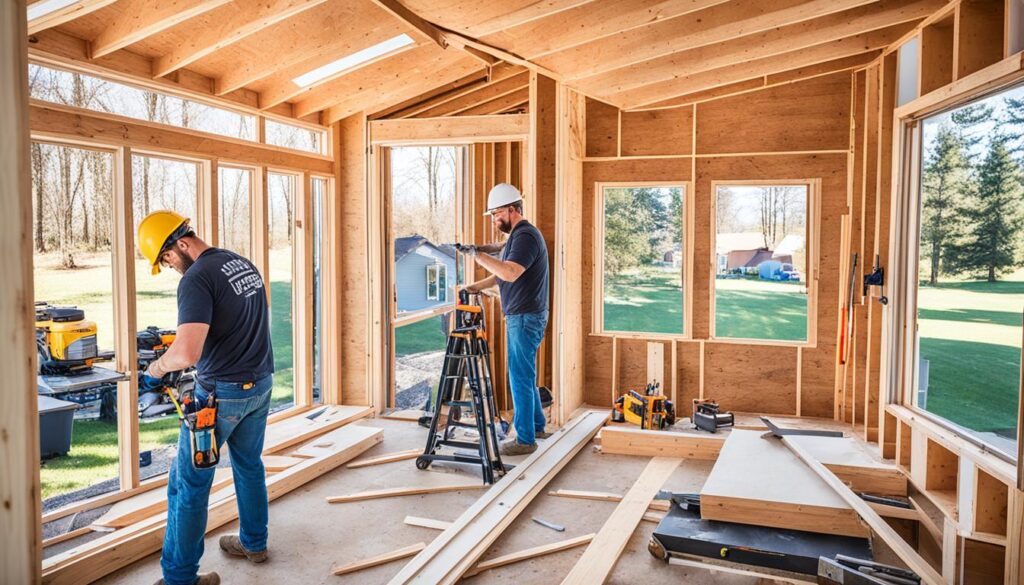
Building a tiny house means using special materials and techniques. These ensure the house is strong yet light. Choosing the right materials is crucial. Wood, metal, and certain sidings like clapboard are popular choices. They are durable, light, and make the most of limited space.
Construction Techniques
Special techniques are also key in tiny house building. Modular construction is one method. It involves building the house in parts off-site and then putting it together at the final location. This method saves time and ensures a high-quality build.
Using reclaimed and recycled materials is another common approach. Builders use salvaged wood and metal to make tiny houses. This not only saves resources but also reduces waste and environmental impact.
The aim of tiny house construction is to build a strong, efficient, and attractive home. By planning and executing the build well, tiny house lovers can live in a compact, eco-friendly, and personalized space.
“Tiny house construction is not just about building a small home; it’s about creating a lifestyle that aligns with our values of sustainability, simplicity, and freedom.”
Tiny House Communities and Zoning Laws
The tiny house movement is growing fast. This means more tiny house communities are being built. These places offer shared amenities and help with legal issues like building codes and zoning laws.
In the U.S., tiny house communities are popping up everywhere. They provide small, eco-friendly living spaces. Living in these communities means you get to enjoy shared facilities, support, and a strong sense of community.
| Community Name | Location | Tiny House Details |
|---|---|---|
| Escalante Village | Colorado | Homes average 400 square feet on lots 20 feet wide and 40 feet deep, allowing space for the home, two cars, and a patio. |
| Tiny Home Village | New Mexico | Consists of 30 tiny houses that are 120 square feet each, providing housing and support for unhoused individuals. |
| Cedar Springs Tiny Village | Ohio | Ohio’s first tiny house village, offering 30 lots with amenities such as a community garden, walking paths, WiFi, and cable connections. |
But, building these communities is hard because of zoning laws and building codes. These rules can be tricky to navigate for tiny house fans and builders.
“The majority of tiny house owners find themselves in a legal gray area, as specific regulations vary from county to county and state to state.”
Still, more communities and local governments are making tiny house-friendly rules. As the tiny house trend grows, it’s important for leaders to work together. They need to find new ways to support this lifestyle.
Transitioning to Tiny House Living
Living in a tiny house means changing how we live and what we own. Downsizing and decluttering are key steps. They help us get rid of things we don’t need. By using smart decluttering methods and living a minimalist lifestyle, we can make our tiny homes efficient and true to our values.
Downsizing and Decluttering Tips
Switching to a tiny house means looking closely at what we own. Here are some tips for downsizing and decluttering:
- Begin by checking each item in your home. Ask if it makes you happy or is useful. If not, it’s time to go.
- Work on one room at a time. This makes decluttering easier.
- Follow the “one in, one out” rule. Add a new item, remove an old one.
- Use furniture that serves more than one purpose and creative storage to make the most of tiny house space.
- Think about renting a tiny house for a night to get inspiration and understand the lifestyle before you start.
By adopting a minimalist mindset and decluttering smartly, you’re on your way to a smooth transition to tiny house living.
“Downsizing possessions before transitioning to tiny house living takes three times longer than expected.”
Tiny House Inspiration and Design Ideas
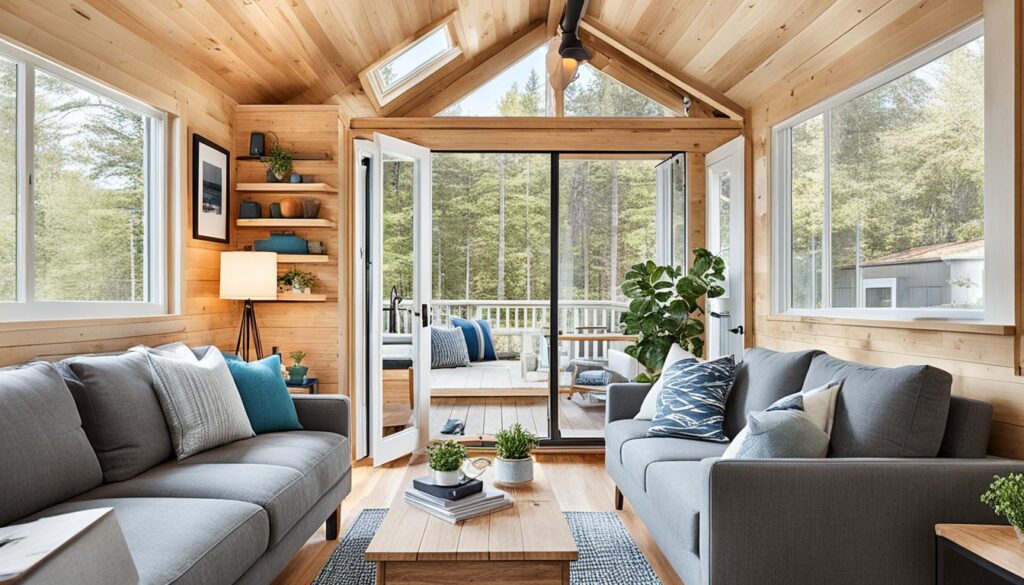
The tiny house design world is full of creative ideas for those wanting a simpler life. You can find everything from cozy cabins to modern designs. These tiny house plans offer many ways to live smaller and simpler.
The Truoba Mini 419 is a 1,170 square-foot home with 2 bedrooms and 2 bathrooms. It has an open layout to make the most of space. The Truoba Mini 220 is even smaller, at 570 square feet, but still has 1 bedroom and 1 bathroom.
The Truoba Mini 522 has 2 bedrooms and 2 bathrooms in 1,250 square feet. The Truoba Mini 221 fits 2 bedrooms and 1 bathroom in 650 square feet. And the Truoba Mini 721 has 2 bedrooms and 2 bathrooms in 1,162 square feet, showing how versatile tiny house design can be.
The tiny house movement is full of creative solutions for living small. You can find everything from multi-functional furniture to unique roof styles. Whether you like the look of a wooden yurt or a modern gooseneck home, there’s a tiny house design for you.
By focusing on efficient design, tiny house fans show that living small can be fulfilling. With careful planning and creativity, the options for tiny house designs are endless.
open concept tiny house floor plans
The tiny house movement is growing fast. More people are choosing to live in smaller, yet fully functional spaces. At the center of this trend are open concept tiny house floor plans. These plans focus on being efficient, versatile, and minimalist.
Tiny houses are under 1,000 square feet and come with their own design challenges. Our team has created open concept tiny house floor plans that make the most of every inch. These plans make small spaces feel bigger by removing walls and creating spaces that serve multiple purposes. This way, people can make their homes fit their unique needs and lifestyle.
- Our tiny house floor plan collection features 154 designs for various lot sizes, from narrow to wide.
- These plans are for permanent homes with foundations, not just trailers.
- The plans vary in size from 317 square feet to 973 square feet. They offer many options for first-time buyers, downsizers, and those wanting a simpler life.
| Tiny House Plan Size | Number of Bedrooms | Number of Bathrooms | Estimated Cost |
|---|---|---|---|
| 317 sq ft | 1 | 1 | $30,000 – $50,000 |
| 650 sq ft | 2 | 1 | $50,000 – $80,000 |
| 973 sq ft | 3 | 2 | $80,000 – $120,000 |
Building a tiny house yourself can cut costs by up to 50% compared to hiring a pro. This makes our small house floor plans a great choice for those looking for an affordable, sustainable home. Whether you’re a first-time buyer, downsizing, or embracing minimalism, our efficient layouts and space-saving design ideas can help you build your dream tiny house.
“The beauty of tiny house living is the ability to personalize your space and make it truly your own. Our open concept floor plans allow for endless possibilities in terms of custom features and design choices.”
Tiny House Living: Challenges and Solutions
The tiny house lifestyle has many benefits but also brings unique challenges. Homeowners face issues like limited storage, adapting to a smaller space, and fitting in essentials. Yet, with careful planning and a minimalist approach, these challenges can be overcome. This leads to a more sustainable and fulfilling life.
One big challenge is managing storage space in a tiny house. It’s hard to fit all your stuff in a small area. To solve this, adopt a decluttering mindset and regularly check what you really need. Using multi-functional furniture and vertical space can also help.
Adjusting to a smaller living space is another hurdle. It might take time to get used to a smaller kitchen or shared areas. But, with an open mind and intentional design, you can make your tiny house feel like home.
| Tiny House Challenges | Solutions |
|---|---|
| Limited storage space |
|
| Compact living environment |
|
| Incorporating essential amenities |
|
Adding essentials and personal items to a tiny house can be tough. Good planning, choosing the right appliances, and focusing on both looks and function can help. This way, you can make your tiny house both cozy and practical.
By tackling these challenges positively, tiny house owners can enjoy downsized living perks. These include less environmental impact, more money, and a simpler, more connected life. With the right approach, the limits of tiny house living can open doors to a more meaningful lifestyle.
Conclusion
The tiny house movement has made us all look at living spaces differently. Now, we’re drawn to open-concept designs that make our homes feel bigger. These designs use smart furniture and storage to make the most of every inch. This way, we can live simply and sustainably without giving up comfort or style.
More and more people want homes that are compact but efficient. The trend of open-concept tiny house floor plans is leading the way in small home design. These plans are perfect for those who love a minimalist lifestyle and want to save space. They show us how to enjoy the tiny house life fully.
Planning and design are key to making the most of tiny living. The tiny house movement is changing how we think about our homes. We can look forward to even more innovative designs that let us live big in small spaces. These homes are not only cozy but also good for the planet.

