In today’s world, the average home price is over $300,000. Many of us dream of a home that’s affordable. The idea of finding a small house for 100k might seem like a dream. But, it’s a journey worth taking.
We’ll explore how to build a cozy, efficient, and affordable small home. You won’t have to give up the comforts you love. Let’s start this exciting journey together.
As we explore, we’ll find strategies to make homeownership a reality. Small houses, from 150 to 1,000 square feet, are gaining popularity. With smart design and budgeting, we can overcome the housing market’s challenges. Let’s discover how to build a small house for 100k and make our dreams come true.
Key Takeaways
- Building a small house for 100k is feasible with effective budgeting and simplified designs.
- Small houses typically range from 700 to 1485 square feet and can include two or more bedrooms.
- Utilization of unconventional materials and efficient layouts can significantly reduce costs.
- Engaging experienced builders helps ensure the project is completed to a high standard.
- Energy efficiency can lead to substantial savings on monthly utility bills over time.
The Shift Towards Smaller Homes
Recently, there’s been a big move towards smaller homes. Rising housing costs in America make it hard for many to afford big houses. Now, people are looking for simpler, cheaper ways to live. This trend isn’t just about saving money; it’s also about living with fewer things and caring for the planet.
Rising Housing Costs in America
The average U.S. home costs nearly $298,000 today. This price tag is out of reach for many. So, more folks are turning to smaller homes as a solution. These homes, priced between $40,000 and $80,000, often need some work but are still affordable. Living in a smaller space can actually make life better and cheaper.
The Appeal of Minimalism and Affordability
Minimalism helps us clear out clutter and simplify our lives. Smaller homes focus on what’s really needed, cutting out the extras. This lets us add green features like solar panels and composting toilets. It’s a smart move when housing costs are high, as it leads to a more meaningful, eco-friendly lifestyle. For more on tiny homes, check out tiny home interactions that offer valuable advice.
| Aspect | Standard Homes | Smaller Homes/Tiny Homes |
|---|---|---|
| Average Cost (2021) | $298,000 | $50,000 – $80,000 |
| Common Features | Multiple rooms, larger living space | Essential functions, sustainability features |
| Environmental Impact | Higher due to larger resources | Lower with efficient designs |
| Maintenance Costs | Generally higher | More manageable |
Budgeting: Can You Build a Small House for 100k?
Starting a small house project for 100k requires a solid budget plan. A clear budget helps us track expenses and avoid surprises. It’s all about planning and staying on track.
Establishing a Realistic Budget
First, we need to consider several costs. Building a new home costs about $284,262 on average. For a 100k budget, we must plan carefully.
Our budget should include:
- Land costs, which vary by location; for example, an acre in Gerlach, Nevada, is about $157.
- Material costs, which can be $100 to $500 per square foot. Using affordable materials helps stay within budget.
- Labor costs, which are $50 to $100 per hour, depending on the project’s complexity.
We also need to think about other costs like closing fees, insurance, and permits. Research helps create a budget that covers all these costs.
Factor in Unexpected Costs
During construction, unexpected costs often pop up. A contingency fund is key for these surprises. Costs like site prep, septic systems ($7,000), or solar systems might require extra money.
Keeping a detailed list of possible unexpected costs helps us act fast. Being ready for changes keeps our budget on track.
Simple Home Design Strategies
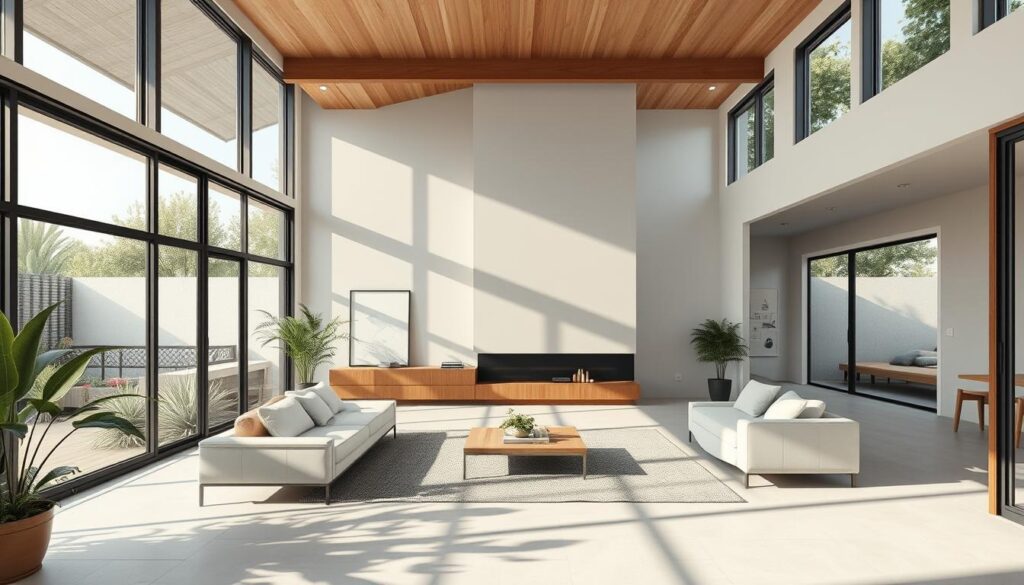
When aiming to build a small house for 100k, simple design strategies can save a lot. Minimalist design focuses on function over fancy. It makes homes look better and costs less to build.
Benefits of Minimalist Design
Minimalist design has many perks. It makes spaces more efficient and less cluttered. This way, we save on labor and materials, keeping our budget in check. It also means fewer problems during construction.
Choosing Basic Shapes to Cut Costs
Using basic shapes like squares and rectangles helps save money. These shapes are easier to build and need less design work. This simplicity also applies to things like roofs and walls, saving even more.
By focusing on what’s essential, we can build a beautiful, functional home without breaking the bank.
| Design Strategy | Cost Implication |
|---|---|
| Minimalist Design | Lower labor and material costs due to simplified processes |
| Basic Shapes | Reduced architectural modifications leading to time and cost savings |
| Functionality Focus | Practical layouts that maximize usable space without excess |
Maximizing Square Footage
When building a small house for 100k, we need to focus on making the most of our space. This way, we can stay within our budget and still have a cozy home. Knowing the cost per square foot helps us make smart choices that fit our budget.
Understanding Cost per Square Foot
The cost per square foot is key to using our space wisely. Smaller homes, from 150 to 1,000 square feet, can save us money. By picking the right materials and building methods, we can cut costs without sacrificing quality.
Adding value to our home with smart features is also important. Some upgrades, like new roofs or attic insulation, can bring big returns. Here are some examples:
| Renovation/Addition | Average Return on Investment |
|---|---|
| Installing a new roof | 105% |
| Adding attic insulation | 117% |
| Replacing siding | 93% |
| Bathroom additions | 86% |
| Kitchen renovation | 67% |
Designing Efficient Spaces
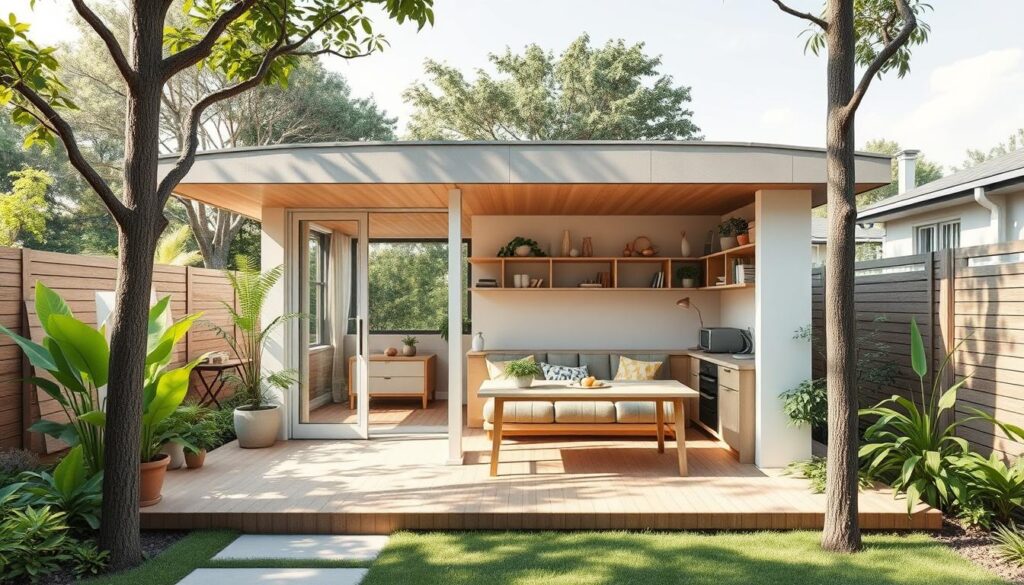
Improving our home’s design can make it more functional. Using spaces in multiple ways helps us use every inch. For example, open-concept layouts make our homes feel bigger.
Choosing built-in storage also helps us keep our space tidy. By making smart design choices, we can enjoy our home more. Every corner can be useful and beautiful.
Building Materials: Saving Money
Choosing the right building materials is key when building a small house for 100k. We can save money by making smart choices. This way, we get both durability and style without breaking the bank.
Choosing Conventional vs. Unconventional Materials
Traditional materials are reliable, but we can find cheaper alternatives. Using recycled containers or eco-friendly materials cuts costs. It also adds a unique touch to our home.
Choosing resourceful materials helps us save money and reduce waste. This approach is good for our wallets and the planet.
Benefits of Prefabricated Components
Prefabricated homes are a great way to save money. They’re built in factories, which makes construction faster and cheaper. This method saves on labor and time, leading to big savings.
These homes use pre-made parts that are reliable. This ensures our small house looks great and is built to last.
Engaging Experienced Builders
Building a small house for around $100k requires the right builder. They help us through the construction process and keep costs down. It’s not just about the price; it’s about finding someone who knows how to manage a project well.
Selecting the Right Home Builder
In Chicago, building costs have skyrocketed. From $600k in 2019 to 1.5 million in 2022, we need cost-effective builders. We look at their past work and client feedback to see if they’re reliable and open about costs.
Understanding the Importance of Experience
Experience helps us avoid construction problems. Builders with experience can suggest ways to save money, like using reclaimed materials. They also know about cost-saving options like existing homes or modular builds.

