The tiny home movement is sweeping the nation, with the East Coast at its forefront. Here, you’ll find a variety of options for those seeking sustainable living without giving up comfort. These spaces offer a blend of compact luxury and social connections.
Tiny home communities East Coast are more than a passing trend. They symbolize a shift towards affordability and sustainability. With amenities like communal areas, storage, and recreational spaces, they welcome a wide range of people. From young professionals to seniors, everyone shares a commitment to tiny living, building strong bonds along the way.
Exploring tiny living means diving into how these communities have adapted to modern needs. Join others who value the community and connection that come with tiny living. Make the most of every inch of space, living in harmony with others.
Key Takeaways
- The East Coast is a leading region for tiny home communities.
- These communities emphasize sustainable living and compact luxury.
- Residents enjoy a range of shared amenities and community spaces.
- The demographic ranges from young adults to retirees, fostering a diverse culture.
- Live close to nature and enhance your quality of life in a supportive environment.
The Rise of Tiny Home Communities East Coast
The tiny home movement is growing fast in the U.S., and the East Coast is catching on. States like Pennsylvania, North Carolina, and Florida are seeing more tiny home communities. These places offer a chance for sustainable living and a simpler way of life.
Understanding the Tiny House Movement
The tiny house movement is all about living simply. It’s about valuing what really matters in life, like relationships and experiences, over stuff. Many states are now welcoming these communities. The East Coast is seeing more options for those looking for a different way to live.
Benefits of Tiny Living
Living in a tiny home has many perks. For one, it can save you money because homes are cheaper to buy and keep up. You can spend your money on things you enjoy, not just stuff. Plus, tiny homes are better for the planet since they use less energy and create less pollution.
Here’s a look at what you might pay for a lot in some tiny home communities:
| Community Name | Location | Lot Rental Cost (Per Month) |
|---|---|---|
| Lake Walk Community | South Carolina | $450 |
| Orlando Lakefront at College Park | Florida | $350 – $650 |
| Tiny Estates | Pennsylvania | Varying rates |
| Vintage Grace | Texas | $325 – $390 |
Community Culture and Connection
Living in tiny home communities means being part of a tight-knit community culture. You’ll find shared spaces like gardens and play areas where you can meet others. It’s a chance to connect with people who value living sustainably. These relationships turn neighbors into close friends, making your life richer.
Exploring Unique Tiny Home Communities East Coast
Discovering unique tiny home communities on the East Coast lets you live affordably while enjoying beautiful nature. These places offer everything from peaceful landscapes to lively communities. Let’s check out some top picks.
Tiny Estates: A Gem in Lancaster, Pennsylvania
Tiny Estates is a standout in the US for tiny home communities. It started in 2018 and has almost 60 lots in a beautiful, semi-rural area. People here enjoy two ponds and hot tubs, making it a close-knit community for all ages. It welcomes pets and doesn’t have a size limit, making it perfect for affordable tiny living.
Orlando Lakefront: Affordable Living in the Sunshine State
Close to downtown Orlando, Orlando Lakefront offers the best of city life and affordable living. It has about forty tiny homes with various lease plans. The community has gardens and fishing docks, ideal for a laid-back life close to the city. Its friendly vibe and flexible living spaces add to its appeal.
Little River Escape: Scenic Serenity in Georgia
In Menlo, Georgia, Little River Escape is a nature lover’s dream. It has 48 lots, a pool, and places for people to gather. With nature trails and stunning views, it’s perfect for those who love scenic tiny homes and quiet living. Activities like kayaking and hiking are right outside your door.
Key Features of Tiny Home Communities East Coast
Exploring tiny home communities East Coast shows a mix of comfort and social life. They offer lifestyle amenities and community spaces designed for their residents’ needs.
Amenities That Enhance Lifestyle
Tiny home communities have many amenities for comfort and ease. Residents enjoy:
- Shared kitchens for cooking together
- Fitness stations for staying healthy
- Laundry facilities to make chores easier
- Communal gardens to connect with nature
These amenities create a lively living space and help neighbors connect while making life simpler.
Community Spaces and Shared Resources
Community spaces are key in tiny home living. They offer places for socializing and working together, like:
- Fire pits for cozy nights under the stars
- Recreational areas for fun and games
- Dog parks for pet lovers to meet
These shared areas help build community and let residents pursue their interests, forming strong bonds.
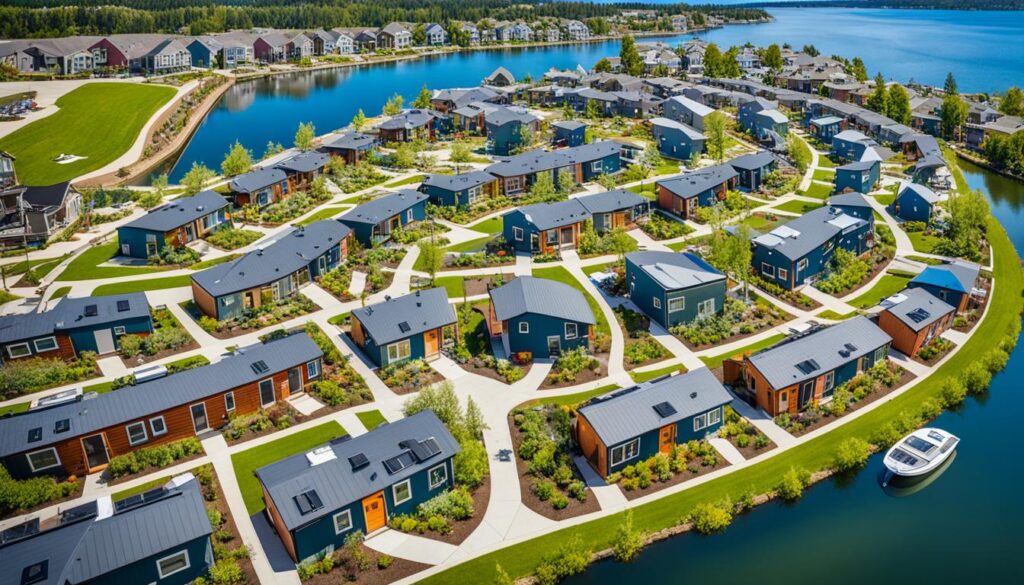
Finding Your Ideal Tiny Home Community
Finding the perfect tiny home community takes careful planning and exploration. Start by looking for communities that fit your lifestyle and needs. This means doing research and then visiting places to see what it’s like to live there.
Researching and Visiting Communities
Begin your search with thorough research. Look at important factors like community amenities, square footage, and the overall feel of the place. Tiny homes can be as small as 100 square feet or as big as 700 square feet. Places like Acony Bell in Mills River, North Carolina, offer a variety of sizes. It’s important to think about what size is right for you.
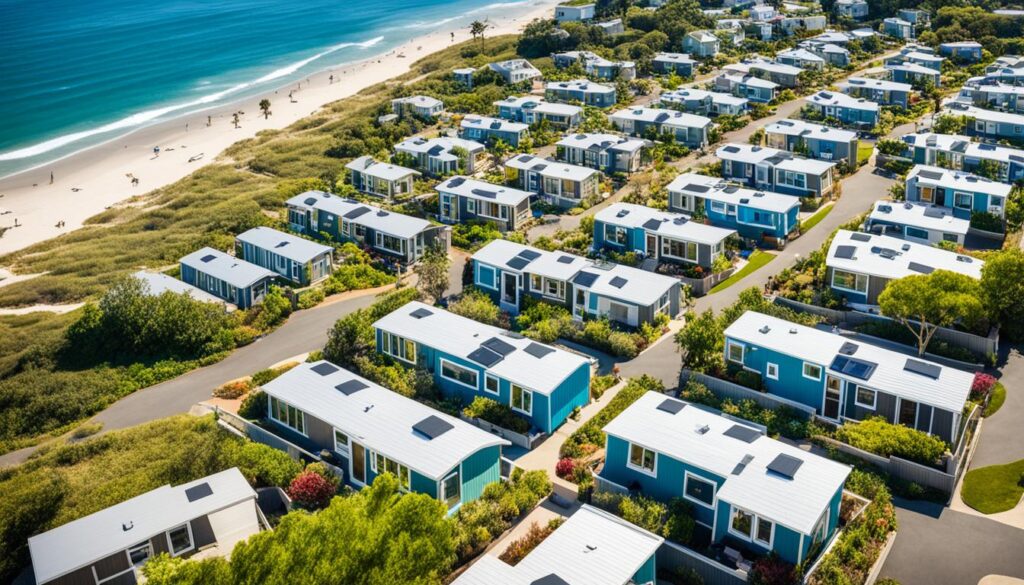
When you visit these places, you can really get a feel for the area. You might find swimming pools, fitness centers, and gardens. Western North Carolina is known for its beautiful features, like those in Simple Life communities.
Understanding Rules and Regulations
Each tiny home community has its own rules. These can cover things like how homes are built, how long you can stay, and even pets. It’s a good idea to learn about these rules to make sure they fit your lifestyle. Places like The Hamlet have specific rules designed for their residents.
Connecting with Residents Before Moving In
Talking to current residents can make moving in easier. They can share their experiences and what it’s like living there. This helps you understand the community better and feel like you belong, making your tiny home experience better.
| Community Name | Location | Size Range (sq ft) | Price Range | Amenities |
|---|---|---|---|---|
| Acony Bell | Mills River, NC | 100 – 700 | Varies by model | Community fire pit, proximity to breweries |
| The Hamlet | Flat Rock, NC | 399 – 540 | Starting at $160,000 | Resort-style amenities |
| Cranmore Meadows | Haw River, NC | Varies | $700/month | Outdoor pavilion, catering kitchen |
| Mountain Breeze Ridge | Scaly Mountain, NC | Varies | $49,000 – $69,000 | Water, power, septic linkage provided |
Conclusion
The East Coast is seeing a rise in tiny home communities. These places offer a lifestyle that values sustainable living and building strong community ties. You can pick from places like Riverside Tiny House Village or Village of Wildflowers, each with its own special features.
These communities have amenities and shared spaces that make living better and help the planet. They show that living small can be big in benefits.
Living in a tiny home is good for your health. Studies show it can boost your mental health and brain function. At places like Balsam Mountain Preserve, you get to live close to nature while still having modern comforts.
Tiny home communities are more than just affordable and simple. They create a space for people to connect with others who value similar things. Joining the tiny home movement means you’re part of a community that cares about living sustainably and well together.

