Small house neighborhoods are getting more popular as people look for affordable living. They offer a community-focused lifestyle. The move to tiny house living has grown, thanks to the global pandemic. It makes people rethink their lives and choose downsizing.
These areas have tiny homes or smaller houses. They’re perfect for those wanting a simple life but still wanting to be part of a community.
In the U.S., many cities see the benefits of small house neighborhoods. They are sustainable and help solve issues like homelessness. As more people choose these eco-friendly options, they find a sense of belonging. It makes these neighborhoods a great choice for those wanting a simpler life.
Key Takeaways
- Small house neighborhoods offer an affordable alternative to traditional housing.
- Tiny house living encourages a minimalist lifestyle and community connections.
- Downsizing is a growing trend that is embraced by various demographics.
- Municipalities are increasingly recognizing the benefits of small house living.
- Small neighborhoods can help tackle homelessness through innovative housing solutions.
- Living in small house communities promotes sustainability and environmental awareness.
The Allure of Small House Neighborhoods
Many people are now choosing small house neighborhoods for their unique lifestyle. Living in a smaller space helps with sustainable living and is more affordable. These homes need less upkeep and have lower utility bills, making life simpler and quieter. Plus, they often sit in beautiful settings that make living there even better.
Why Choose a Small House?
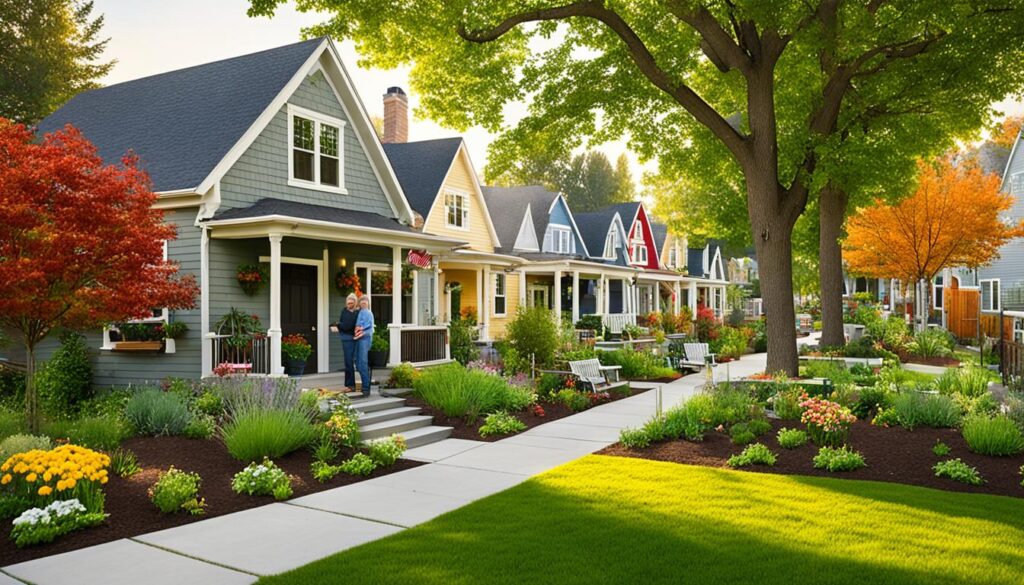
Choosing a small house has big perks. These homes help build strong community ties and encourage a more thoughtful way of living. Pocket neighborhoods are a great example, with houses close together and shared spaces for everyone. For example, the Third Street Cottages, started in 1996, are about 650 square feet each, with areas for everyone to meet up. Developers make sure these spots are perfect for making friends, creating a lively feel.
Benefits of Small House Living
Tiny home benefits include a smaller environmental impact. They use fewer resources to build and maintain. Plus, many tiny homes can move, giving owners the freedom to change locations. Living in these neighborhoods also means being part of a close community. People share values and easily connect, making a supportive place to live.
| Characteristic | Small House Neighborhoods | Traditional Neighborhoods |
|---|---|---|
| Community Interaction | High due to shared spaces | Varies |
| Environmental Footprint | Smaller, encourages sustainability | Larger, more resource-intensive |
| Flexibility | Many homes on wheels | Fixed locations |
| Maintenance | Lower | Higher |
| Living Space | Efficient use of small areas | More abundant space |
Finding Community in Small House Neighborhoods
Small house neighborhoods are more than just cozy places to live. They build a strong sense of belonging among people. Living together with shared values like caring for the planet and simple living helps form deep friendships. Being part of social activities makes it easier to connect with others and feel like you belong.
Shared Values and a Strong Sense of Belonging
In these neighborhoods, people often connect over their choices that help the environment. Living simply creates a base for working together and making friends. Everyday chats with neighbors build a support network, making the area feel like a second home. This is especially important as it fights the loneliness found in big cities.
Social Events and Activities in Small Communities
Small house neighborhoods host many social events to bring people together. Some examples include:
- Community dinners that celebrate local foods and make friends.
- Festivals that show off the area’s culture and skills.
- Workdays in shared gardens, promoting teamwork and shared effort.
These events help people meet and make memories together. Being active in these activities makes living in a community better for everyone.
Notable Small House Neighborhoods in the U.S.
The United States has many small house neighborhoods that show what community living is all about. These places are more than just homes; they’re a way of life focused on being green and connected.
Cedar Springs Tiny Village in Ohio
Cedar Springs Tiny Village is a top spot for tiny home living. It has 30 lots with all the modern comforts. People here enjoy shared gardens and paths for walking and playing outside. It’s all about living simply but feeling like you belong.
Community First! Village in Texas
In Texas, Community First! Village is made for people without homes. It helps over 250 residents with tiny homes and support services. There are places for everyone to meet and have fun, making it a special place to live.
Escalante Village in Colorado
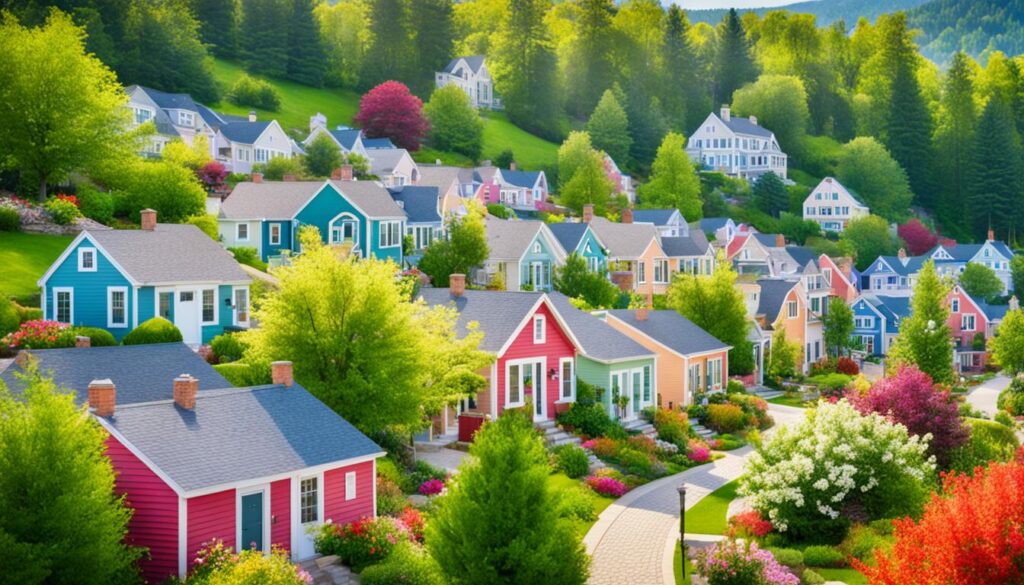
Escalante Village is in the Colorado mountains, blending outdoor fun with community. People here enjoy river trails and gardens, making their lives better. It’s a peaceful place that brings people together.
Adapting to Life in Small House Neighborhoods
Living in small house neighborhoods means you need to think carefully about design and lifestyle. Using efficient design helps make the most of small spaces and makes them feel welcoming. Important things to consider include furniture that can be used in more than one way, smart storage, and open floor plans for more light and air.
Designing Your Small Space Efficiently
Using an efficient design in your small house can make it more functional and comfortable. Choose furniture that does more than one job, like a sofa bed or a table that works as a desk. Adding built-in shelves and wall organizers can help with storage and save floor space.
Utilizing Outdoor Spaces
Outdoor living is key in small house neighborhoods. Making your outdoor areas inviting can make your living space feel bigger. Think about creating gardens, patios, or community areas that bring you closer to nature and help you connect with neighbors. These spaces can make your neighborhood more attractive.
Embracing Minimalism and Sustainability
Minimalism fits well with small house living. It means focusing on fewer things to simplify your life and help your community be more sustainable. Try eco-friendly actions like shopping at local farmers markets, composting, and joining neighborhood clean-up events to boost community sustainability.
Conclusion
More people are moving to small house neighborhoods for their focus on sustainability, affordability, and community. After the 2008 economic downturn, the tiny house lifestyle became popular. It offers a way to live simply and deeply.
These neighborhoods come in many forms, from cozy apartments to single-family homes. They show a dedication to living responsibly and sharing common values.
Studies say that small house communities work best when they build strong social ties and good living spaces. Judith Sixsmith’s model highlights how feeling at home and happy are key to loving where we live. The beauty of these neighborhoods is in their size and the bonds they help form among people.
Every friendship made in these places adds to a strong community feeling. It’s not just about the size of the homes. It’s about the connections we make.
If you’re into minimalist living or just learning about small homes, these neighborhoods are for you. They’re full of people who share your values. Moving here could lead to a happier, more connected life.

