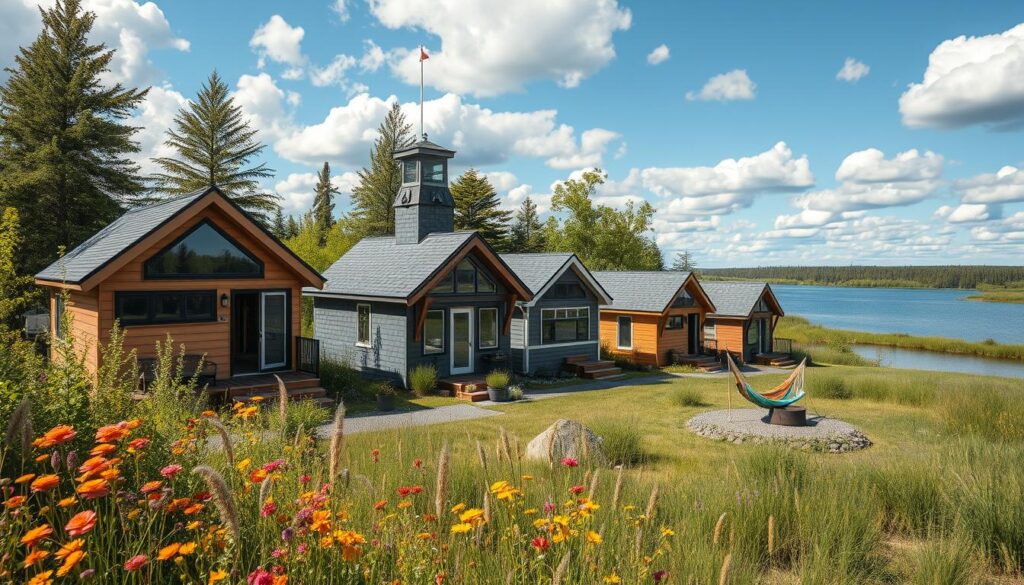
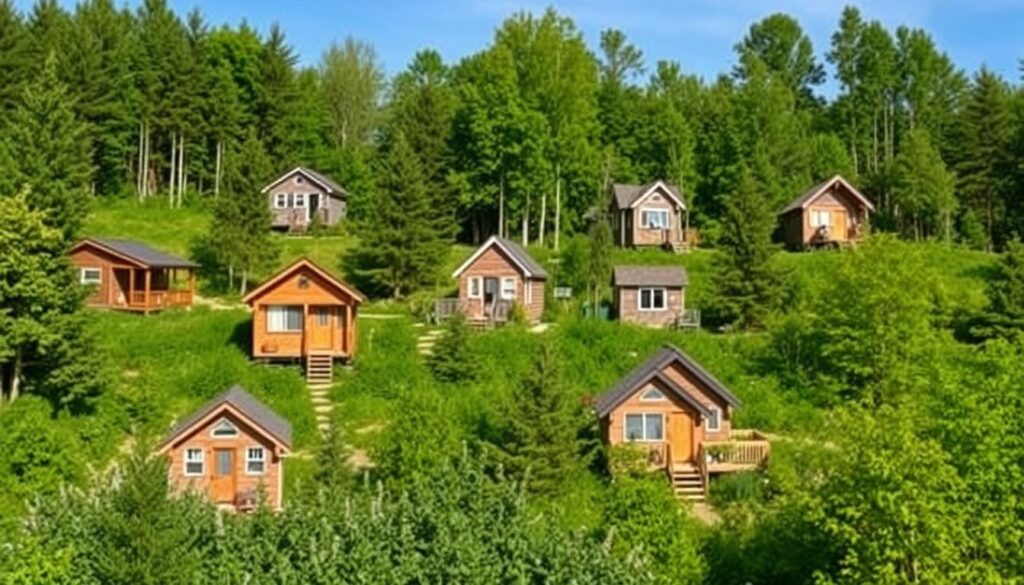
As the bustling city of Winnipeg grapples with the challenges of affordable housing, a new wave of compact living is taking shape. In a charming suburb just outside the city, a family-owned farm has embraced the tiny home movement, offering a glimpse into the future of sustainable and economical housing solutions. Tucked away amidst rolling hills and lush green meadows, this modest homestead has become a beacon for those seeking an escape from the urban sprawl, without sacrificing the comforts of modern living.
The owner, a retired couple with a passion for design and conservation, have transformed their property into a tiny home oasis, showcasing the versatility and allure of these pint-sized dwellings. From cozy cabins nestled among the trees to sleek, minimalist structures that seem to defy the laws of space, their collection of small homes has captured the imagination of visitors from near and far.
As word of their endeavor spreads, the couple’s modest farm has become a hub of activity, drawing in young families, downsizing retirees, and adventurous souls seeking a more mindful, eco-friendly way of life. The tiny homes they’ve crafted, each with its unique personality and features, offer a tantalizing glimpse into the future of urban planning and sustainable living in Manitoba.
Key Takeaways
- The tiny home movement is gaining traction in Manitoba as a solution to affordable housing challenges.
- Small homes in Manitoba offer cozy and eco-friendly living spaces with various amenities and customizable layouts.
- The trend provides a unique living experience and is appealing to diverse demographics, from retirees to first-time buyers.
- Regulations and municipal bylaws in Canada govern the minimum size and other requirements for tiny homes.
- Innovative projects like the Astum Api Niiknaahk in Winnipeg demonstrate the potential of small-scale, sustainable housing solutions.
The Rise of Tiny Houses in Manitoba
The tiny house movement has been slowly gaining traction in Winnipeg, with the first few units taking a few years to design and make inhabitable. While the initial developments were limited, these compact living spaces have gained attention due to their potential to provide affordable and comfortable housing solutions.
Exploring the Concept and Initial Developments
Tiny houses, often defined as dwellings under 400 square feet, offer a unique approach to minimalist living. In Winnipeg, the concept has begun to take shape, with the city’s first tiny home village, Astum Api Niikinaahk, consisting of 22 units and a community lodge. This project, designed to address homelessness, includes four fully accessible units for individuals who use wheelchairs or walkers.
Weighing the Pros and Cons of Compact Living
The rise of tiny house manitoba and small home living winnipeg has sparked discussions about the advantages and challenges of compact housing winnipeg. On the positive side, tiny homes offer a reduced environmental footprint, lower utility costs, and the potential for greater financial freedom. However, limited storage space and the need to adhere to zoning laws and building codes can pose challenges for minimalist living manitoba.
| Pros of Tiny Homes | Cons of Tiny Homes |
|---|---|
|
|
“The tiny house movement has the potential to provide innovative and affordable housing solutions for Winnipeg residents, especially those facing homelessness or seeking a more sustainable lifestyle.”
Tiny Homes for the Homeless: Astum Api Niiknaahk Project
In 2022, the Astum Api Niiknaahk project was introduced in downtown Winnipeg, offering a glimmer of hope for those previously without a roof over their heads. This innovative tiny homes initiative provides 22 housing units, each approximately 170 square feet in size, to individuals experiencing homelessness. The project also includes 4 larger 400-square-foot units designed for those with mobility needs.
The Astum Api Niiknaahk project aims to address the pressing issue of affordable housing for homeless individuals in Manitoba, providing not just shelter, but also a supportive environment for those transitioning out of homelessness. The units are fully furnished and equipped with essential amenities, including a kitchenette, bathroom, bed, internet, and telephone, ensuring a comfortable and dignified living experience.
This tiny homes for homeless winnipeg initiative, funded by the United Way, End Homelessness Winnipeg, and the provincial government, operates on a low-barrier approach. Residents are not required to meet strict sobriety or time-limit requirements, promoting inclusivity and housing stability for those in need.
“The Astum Api Niikinaahk project offers a glimpse into the future of supportive housing winnipeg, where innovative solutions like tiny homes can provide a pathway out of homelessness and towards a more stable, dignified life.”
With affordable housing for homeless manitoba being a pressing concern, the Astum Api Niiknaahk project stands as a testament to the potential of astum api niiknaahk project in addressing this crisis. By providing a safe, secure, and supportive living environment, this initiative aims to empower individuals, foster independence, and ultimately break the cycle of homelessness in Winnipeg.
Affordable Housing Solutions with Small Homes Manitoba
Winnipeg, Manitoba, is facing a housing shortage, but innovative solutions are emerging to address this challenge. Experts believe that small homes and tiny houses may start to develop in various areas of the city, providing a potential solution for those struggling to find safe and affordable housing, particularly for recent immigrants seeking temporary shelter.
The current number of tiny homes in Winnipeg is limited, but more are expected to emerge in the coming years as a way to address the affordable housing crisis. These compact living options range from 100 to 400 square feet in size and can be an attractive option for individuals or families looking for a cost-effective and sustainable living arrangement.
Addressing the Housing Shortage in Winnipeg
Steel shipping container homes are another innovative solution being explored in Winnipeg. These homes can be built as small as 100 square feet and can be expanded to two stories by connecting multiple containers. Cohousing, which involves 15 to 35 units facing a common area for shared living, and co-op housing, which requires a down payment of 20% or more, are also gaining traction as affordable housing alternatives.
Furthermore, the Affordable Homes Program in Manitoba offers financial assistance to eligible households, including down payment assistance, coverage of Land Transfer Tax and Fees, and additional grants for legal fees and moving costs. This program aims to make homeownership more accessible for low- and moderate-income families, addressing the affordable housing winnipeg challenge.
As the demand for small homes for immigrants manitoba and tiny homes as temporary housing continues to grow, the housing shortage solutions manitoba landscape in Winnipeg is evolving, providing hope for those in need of affordable and sustainable living options.
Federal and Municipal Regulations for Tiny Homes
As the popularity of tiny homes continues to grow in Manitoba, potential homeowners must navigate a complex web of federal, provincial, and municipal regulations. To ensure their tiny home meets the legal requirements, aspiring tiny home dwellers need to understand the nuances of the regulations governing this unique housing option.
Understanding the Legal Requirements
In Canada, tiny homes must adhere to traditional residential building codes, including meeting minimum size requirements of at least 188 square feet. Tiny homes not situated on a permanent foundation may be classified as recreational vehicles or mobile homes, subjecting them to additional regulations.
- Tiny homes in Manitoba must have access to electricity, heat, and water to be considered a legal dwelling.
- Tiny homeowners must obtain a development permit before building or placing their home, ensuring compliance with local zoning bylaws.
- Tiny homes can be legally parked in designated mobile home parks, though some municipalities are exploring ways to accommodate them in residential areas.
Navigating these legal requirements can be a complex process, but organizations like the Tiny Town Association provide valuable resources and support to tiny home enthusiasts in Manitoba. By staying informed and working closely with local authorities, tiny home dwellers can ensure their cozy abodes meet all necessary regulations.
“Understanding and adhering to the legal requirements for tiny homes is crucial for those interested in building or living in a tiny home in Manitoba.”
Homes for Heroes: Tiny Home Villages for Canadian Veterans
A remarkable initiative called Homes for Heroes is taking shape in Winnipeg, offering a innovative solution to address the housing challenges faced by Canadian military veterans. This not-for-profit organization is spearheading the creation of tiny home villages, providing affordable and supportive living spaces for those who have selflessly served our nation.
The Homes for Heroes project aims to tackle the alarming statistic that as many as 5,000 veterans are currently homeless and living on the streets in Canada. Each tiny home village built by the foundation is expected to provide 5,000 to 9,000 bed-nights per year for veterans experiencing homelessness, making a tangible impact on this pressing issue.
The foundation has already constructed 5,270 tiny home communities with wrap-around social support services across Canada, with the goal of ending homelessness amongst Canadian military veterans. Their first Veterans Village was launched in Calgary in 2019, and another was opened in north Edmonton in 2021. The plan is to open similar villages in Kingston, Ontario, and Winnipeg in the near future.
The Edmonton village, officially named the Atco Veterans Village, consists of 20 tiny homes, each approximately 300 square feet in size. This $4-million project was made possible through funding from the province, city, and private and corporate donors. To date, more than 20 residents have successfully graduated from the Homes for Heroes programs, finding permanent housing and employment, while others have decided to return to school.
With plans for eight more locations of tiny-home villages for veterans, and potential future expansions in British Columbia, Quebec, and the Maritimes, the Homes for Heroes initiative is poised to make a significant difference in the lives of those who have served our country. By providing affordable, supportive, and community-driven housing solutions, this project aims to empower Canadian veterans and offer them a path to stability and self-sufficiency.
“Homes for Heroes is more than just providing a roof over someone’s head – it’s about creating a community where our veterans can heal, thrive, and find a renewed sense of purpose.”
As the Homes for Heroes project continues to grow, it stands as a shining example of how innovative housing solutions and community-based support can make a transformative difference in the lives of Canadian military veterans in need.
Norway House Cree Nation’s Innovative Housing Solution
In the heart of Manitoba, the Norway House Cree Nation faces a pressing housing crisis. Chief Larson Anderson has emphasized the urgent need for adequate living spaces, as up to 20 people can reside in small homes prone to mould and mildew. To address this challenge, the First Nation has partnered with Bison Modular Homes, a Manitoba-based company that specializes in transforming sea cans into mould-proof, fire-resistant, and energy-efficient modular homes.
Bison Modular Homes: Turning Sea Cans into Mould-Proof Houses
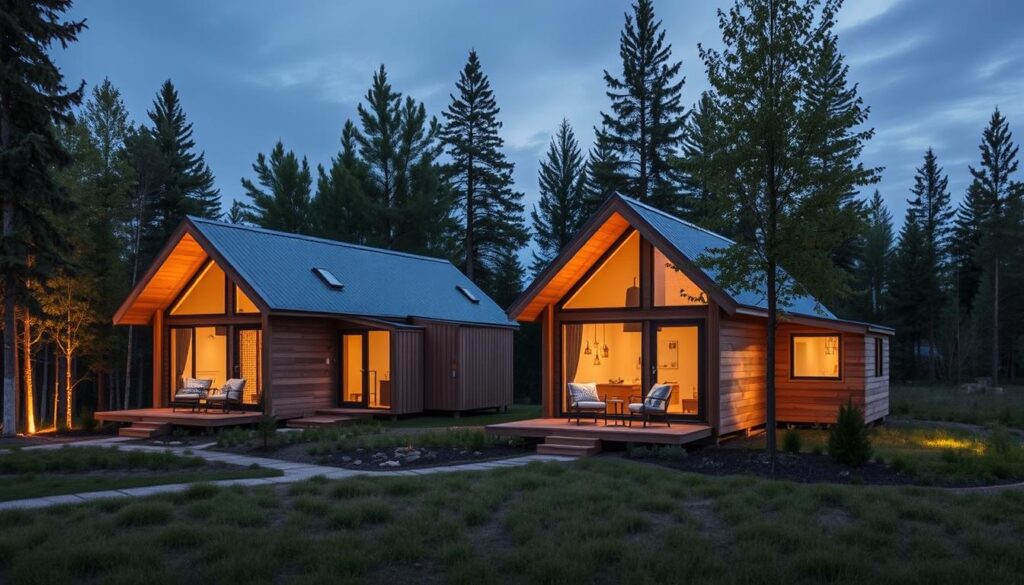
Bison Modular Homes, founded by brothers Tyler and Shane Prevost, has been at the forefront of innovative housing solutions for Indigenous communities. The company repurposes shipping containers to create homes that are airtight, preventing the common issues of mould and rodent infestations often associated with traditional housing. These mould-proof modular homes are designed to withstand the harsh northern winters, featuring amenities such as a bedroom, bathroom, washer-dryer combo, and standard appliances like a stove and fridge.
The sea can houses manitoba can be shipped as ready-to-assemble kits, even during the winter months, and are fully equipped with heating and air conditioning. These versatile structures can serve not only as residential units but also as gyms, daycares, and isolation spaces in the event of a pandemic, allowing for socially distant living arrangements.
Cobra Construction Foreman, Lee Vandamme, oversees the final installation of these bison modular homes in communities like Norway House Cree Nation, providing employment opportunities for local workers and contributing to the indigenous housing solutions within the region.
Bison Modular Homes, now part of the larger Cobra Enterprises with four divisions, has grown from a small two-person company to a leading provider of innovative housing solutions. With a long-term goal of addressing the housing crisis across Canada, the company has been fully booked for 2021 and has bookings extending into 2022, showcasing the high demand for their norway house cree nation housing offerings.
“We’re building houses that are going to last for generations, not just for the next five or ten years. That’s the kind of quality and sustainability we’re striving for.”
– Tyler Prevost, Co-founder of Bison Modular Homes
Modular Buildings: A Comprehensive Solution
Modular homes in Manitoba offer a comprehensive housing solution that combines the efficiency of off-site construction with the flexibility of customizable designs. These prefabricated structures are built to strict quality standards and building codes, providing homeowners with a high-quality and cost-effective alternative to traditional construction methods.
Manitoba’s modular home companies, such as the Bison Modular Homes mentioned earlier, offer a wide range of customizable plans and designs to cater to the diverse needs of homeowners. From simple sketches to pre-designed models, these modular home providers work closely with clients to bring their vision to life, ensuring a seamless and hassle-free building experience.
The benefits of modular construction extend beyond just the home itself. These sustainable building practices reduce waste, utilize recycled materials, and lower energy consumption during the construction process, making them an eco-friendly choice for homeowners in Manitoba. Additionally, the controlled factory environment eliminates delays due to inclement weather, while the use of full-time laborers and tradespeople ensures a high level of quality and efficiency.
| Modular Home Benefits | Traditional Construction |
|---|---|
| Faster project timelines | Slower construction schedules |
| Cost certainty | Potential for budget overruns |
| Sustainable construction practices | Higher environmental impact |
| Superior quality control | Variability in workmanship |
With the growing demand for affordable and sustainable housing solutions in Manitoba, modular buildings are poised to play a significant role in shaping the future of the province’s residential landscape. From cost-effective prefab housing solutions to custom modular buildings, this comprehensive approach to construction offers a promising path forward for homeowners and developers alike.
“Modular construction is the future of the industry, providing a cost-effective and sustainable solution that streamlines the building process while ensuring superior quality.”
small homes manitoba: A Growing Trend
While the demand for small homes and tiny houses in Winnipeg may not be as high as in other areas, the concept is slowly gaining traction in the province. The growing interest in minimalist and sustainable living, as well as the need for affordable housing solutions, are contributing to the rise of small home living in Manitoba.
According to recent statistics, over the past 10 years, more than half (86 out of 137) of Manitoba’s municipalities have experienced a population increase of less than 10%. Among these municipalities, 39 have either seen a decrease in population numbers or remained stagnant in terms of growth. This trend suggests a growing interest in compact living and downsizing among Manitobans.
Reston, a small community in southwest Manitoba, has successfully added 20 to 30 homes through initiatives such as selling housing lots for $10 if a home is built within a year. The community also offers grants of up to $6,000 for individuals moving into the area and up to $32,000 for new businesses establishing themselves. This positive business environment is attracting individuals and families seeking a more connected community experience and lower property taxes.
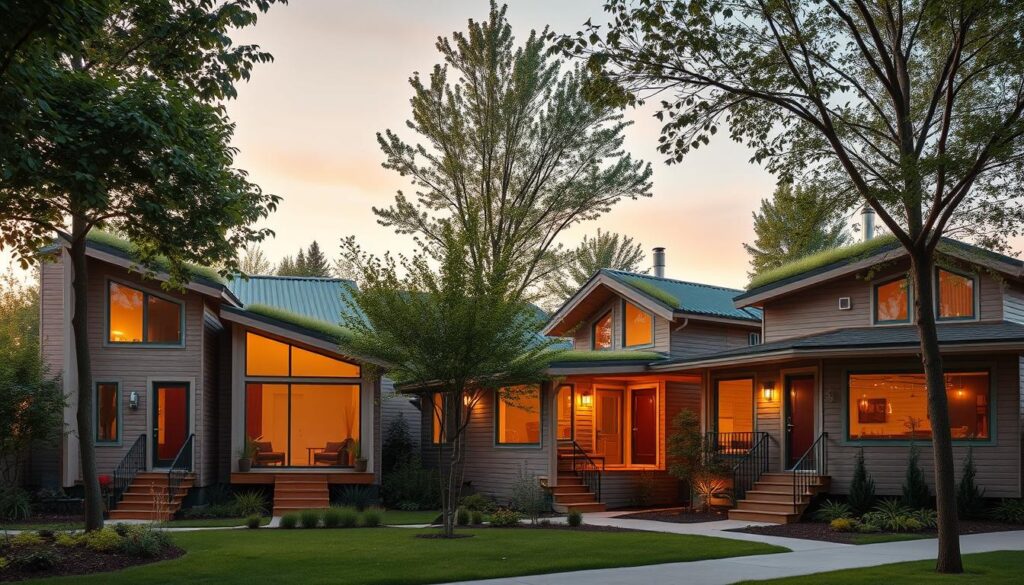
The small homes trend in Manitoba is also evident in the growing popularity of tiny homes. These compact dwellings can be purchased for prices ranging from $50,000 to $100,000, making them a more affordable housing option compared to traditional homes. The majority of tiny homes in the province have been sold for not more than $75,000, with an average size of between 200 and 400 square feet.
As more individuals and families explore the benefits of downsizing and compact living, the small homes trend is expected to continue expanding in the coming years, offering a sustainable and cost-effective solution to Manitoba’s housing needs.
“The growing popularity of tiny homes in Manitoba and across the country indicates a shift towards more affordable and customizable housing options.”
Benefits of Small Homes Manitoba
Small homes and tiny houses in Manitoba offer a range of benefits, including cost-effective and sustainable living. The reduced footprint and lower construction and maintenance costs of these compact dwellings make them an attractive option for those seeking more affordable housing solutions. Additionally, the environmental impact of small homes is generally lower, with their energy-efficient design and minimal resource consumption contributing to a more sustainable living in manitoba.
Cost-Effective and Sustainable Living
As the demand for cost-effective tiny homes continues to grow in Manitoba, the benefits of this trend will become increasingly apparent to residents seeking comfortable, eco-friendly, and budget-friendly living options. The reduced environmental impact of small homes in Manitoba, combined with their overall affordability, make them a compelling choice for those looking to balance their housing needs with their financial and environmental considerations.