As we walk through our neighborhoods, it’s easy to forget that some people are homeless. We believe everyone deserves a safe place to rest. Our initiative aims to build small houses for the homeless.
Each tiny house we build is more than just walls. It’s a beacon of hope for people to rebuild their lives. By working together, we can help those in need, especially veterans and those hit by disasters.
This homeless initiative is our strong response to a crisis that affects over 580,000 people in the U.S. every night. Our tiny house project aims to create a path to sustainable living. We want to make sure no one has to face the harsh streets alone.
Key Takeaways
- Operation Tiny Home, founded in 2014, focuses on building affordable housing for the homeless.
- The organization partners with nonprofits to create lasting housing solutions.
- More than 580,000 people in the U.S. were experiencing homelessness on a single night in January 2022.
- Tiny homes offer durable and energy-efficient options for emergency and transitional housing.
- Contributions to these initiatives are tax-deductible, encouraging community support.
- Pallet has supplied temporary shelters in over 100 communities across 16 states since 2017.
The Need for Immediate Shelter for the Homeless
The homeless crisis in America is a pressing issue that needs our immediate attention. Over 181,000 people in California are without a home. Many live in unsuitable places like encampments and vehicles. Emergency shelters are now a must for those facing extreme hardships.
Understanding the Homeless Crisis in America
Millions of people in America lack safe places to sleep. The homeless crisis is complex, involving economic issues, mental health, and lack of affordable housing. Tiny houses are becoming a solution to provide immediate shelter and a path to stability.
Building small houses is not just about providing shelter. It shows a compassionate side to addressing homelessness.
Statistics on Homelessness in the U.S.
The scale of the homeless crisis is highlighted by statistics. Here are some key figures:
| Statistic | Value |
|---|---|
| Estimated cost to end street homelessness in Philadelphia | $30 million yearly |
| National cost to end chronic homelessness | $30 billion |
| Annual cost of permanent supportive housing for one person | $12,000+ |
| Effectiveness of permanent supportive housing in preventing homelessness return | 90% |
| Effectiveness of rapid rehousing | 75%-90% |
| Annual funding for tiny house village project in Philadelphia | $500,000 |
| Cost of tiny house project in West Philadelphia (12 homes) | $1.2 million |
| Estimated number of homeless people in Philadelphia | 900 |
| Average cost per tiny house | $D |
Tiny house initiatives can make a big difference in addressing urgent shelter needs. By supporting projects like the Tiny House Project, we can offer hope to those without a home. Working together, we can create a brighter future for those in need.
Our Mission: Building Small Houses for the Homeless
Our mission is to help the homeless by providing them with homes. We focus on tiny houses as a smart solution to homelessness. Each tiny house is more than a place to stay; it’s a symbol of dignity and community.
Providing Immediate Relief through Tiny House Projects
We’re proud to offer quick help through our tiny house projects. With the help of leaders, we’ve promised 1,200 tiny homes to California’s Governor Gavin Newsom. This will help over 181,000 people without homes.
Our team of six companies is working hard to make these homes safe and cozy. Each home is 70 to 120 square feet. They’re designed to help people live independently, whether alone or with a small family.
Collaboration with Nonprofits and Community Initiatives
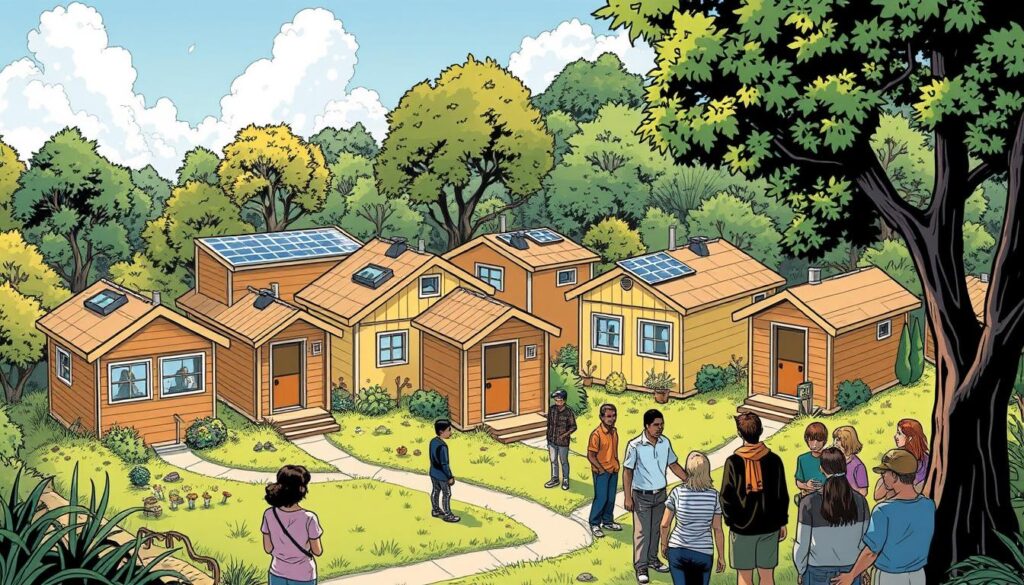
Our success comes from working with nonprofits and community groups. Organizations like Hope of the Valley help us set up tiny home villages. They also provide important services like mental health help and job training.
For example, the Reseda Tiny Home Village opened in June 2021. It has 52 homes with all the basics, giving a safe place to those in need.
By teaming up with nonprofits, we can help more people. Together, we’re changing lives and finding lasting solutions to homelessness.
The Design and Benefits of Tiny House Shelters
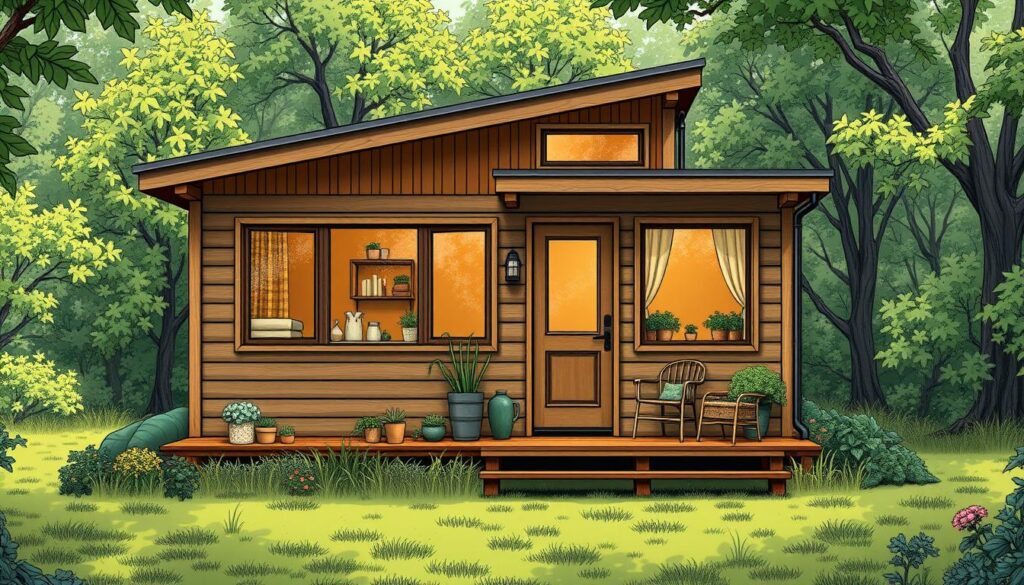
Tiny house shelters are designed to meet the needs of homeless people. They offer safety, comfort, and easy access. These homes are small, usually between 60 and 150 square feet. This size allows for efficient use of space without missing out on important features.
Features of Emergency Tiny Houses
Emergency tiny houses have basic amenities to make living better. Here are some key features:
- Size: These shelters are at least 70 square feet, perfect for one person.
- Basic amenities: They often have a cot, heater, and sometimes kitchen and bathroom.
- Flexibility: Some tiny homes don’t need plumbing, saving money and time.
- Community integration: Tiny house villages, like in Madison, Wisconsin, help people get medical help and social services.
Benefits of Providing a Safe Living Environment
Tiny homes offer more than just shelter. They create a sense of community and belonging. The benefits of tiny homes include:
- They cost less to build and maintain than regular shelters.
- They use less energy, which is good for the environment.
- They encourage people to interact and support each other.
- They help people find stability and grow, making it easier to leave homelessness behind.
- They meet building codes, making them safe and reliable.
The tiny house movement is about being unique and caring for the planet. It’s a new way to help people in need. By using tiny house design for emergency shelters, we’re making a positive change in how we address homelessness.
Challenges in Building Small Houses for the Homeless
Building small houses for the homeless comes with big challenges. Getting enough money and resources is key to making these projects work. Cities like Seattle have shown tiny house programs can be successful, but they need a lot of money to keep going.
Each tiny house in Seattle’s BLOCK Project costs over $75,000. This is much less than the $340,000 it takes to build a low-income housing unit. This shows that tiny homes could be a cost-effective solution.
Funding and Resources for Tiny Home Initiatives
Starting micro-villages with up to 30 tiny homes and shared spaces is hard. Building codes and zoning laws often make it tough to build tiny houses. We need laws that help tiny homes, not block them.
Getting the community on board is crucial. We need to talk to people early and show them the benefits. This can help change laws and make tiny homes more accepted.
Community Engagement and Support
Having the community support tiny homes is essential. But, there’s often opposition and stigma. Successful projects need to work with local governments and get funding from different sources.
When homeowners let tiny houses in their backyards, it shows progress. It’s a sign that people are starting to accept tiny homes. By working together, we can make our neighborhoods better and help those in need.
Conclusion
Building small houses for the homeless is a crucial step in addressing homelessness. It offers immediate shelter and helps people find stability. The houses we build are safe and comfortable for those who need them.
Our work with groups like the Low Income Housing Institute in Seattle shows the strength of community support. Together, we’ve helped 34% of tiny house residents find permanent homes. This shows tiny houses can be a stepping stone out of homelessness.
To improve, we need to focus on funding and getting more people involved. With the help of local leaders, volunteers, and community members, we can make a bigger difference. We invite you to join us in making sure everyone has a place to call home.

