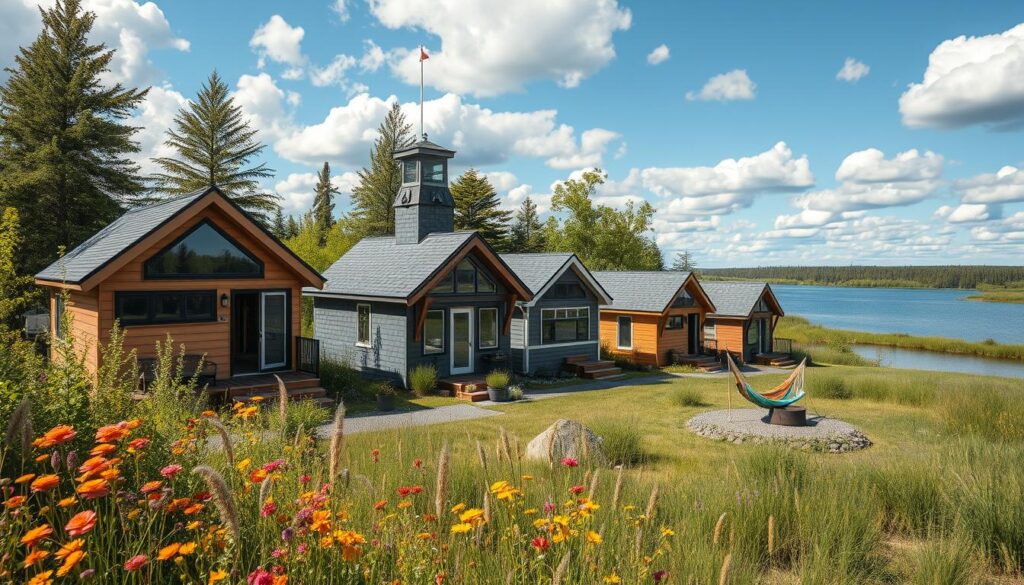
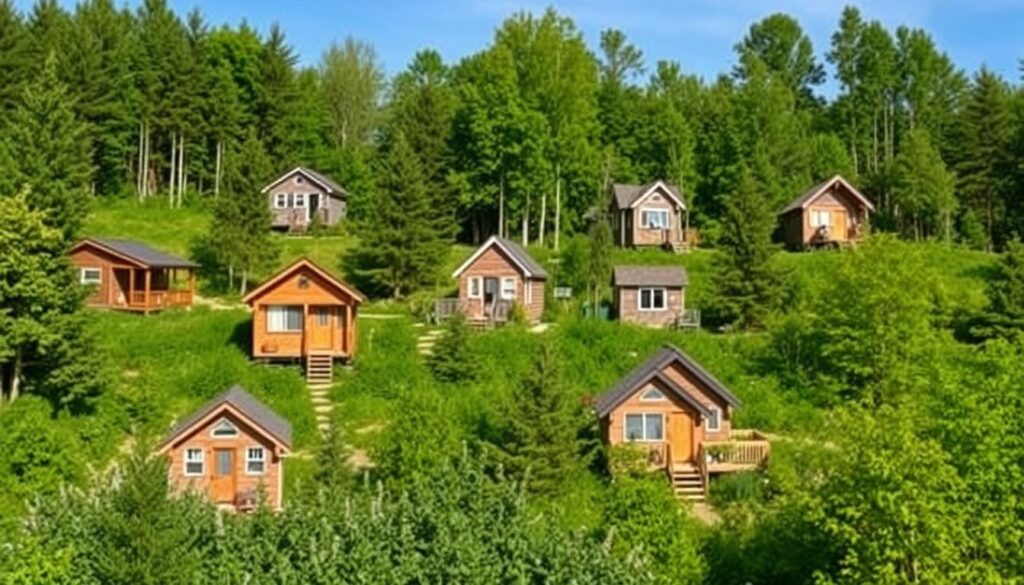
In a quaint corner of Winnipeg, Sarah and her partner, Alex, recently downsized their lives and moved into a charming 300-square-foot tiny home. What was once a spacious suburban house has now become a cozy sanctuary, filled with natural light, custom-built storage, and a minimalist aesthetic that reflects their newfound passion for sustainable living.
Sarah’s journey into the world of tiny homes began a few years ago when she stumbled upon a documentary showcasing the burgeoning tiny house movement. Captivated by the idea of living intentionally and reducing her environmental footprint, she convinced Alex to embark on this adventure together. After months of research, planning, and even building some of the components themselves, their dream of compact living in Manitoba became a reality.
Sarah and Alex’s story is just one of the many that illustrate the growing popularity of tiny homes in Manitoba. Across the province, individuals and families are embracing the concept of minimalist living, seeking out affordable, eco-friendly housing solutions that allow them to downsize and focus on what truly matters. This article will explore the rise of tiny homes in Manitoba, the legal and practical considerations around tiny home living, financing options, and innovative partnerships that are addressing housing challenges in the province.
Key Takeaways
- Tiny homes in Manitoba offer a compact and minimalist lifestyle for those seeking to downsize or embrace a more sustainable way of living.
- The tiny homes movement is gaining traction across the province, with a range of options in terms of size, cost, and features.
- Navigating the legal and regulatory aspects of tiny home living in Manitoba is crucial, as owners must adhere to local bylaws and obtain the necessary permits.
- Financing options for tiny homes in Canada, including mortgages and alternative lending sources, are becoming more accessible.
- Innovative partnerships and initiatives, such as the Idle No More and One House, Many Nations campaigns, are addressing housing challenges in First Nations communities through tiny home projects.
The Rise of Tiny Homes in Manitoba
Across Canada, the tiny home trend is gaining momentum as more homeowners seek out a minimalist lifestyle and the benefits of compact living spaces. In Manitoba, this shift towards sustainable housing is also on the rise, with more people exploring tiny homes as a way to downsize, reduce their environmental footprint, and embrace a simpler way of living.
Exploring the Trend Towards Minimalist Living
Tiny homes offer a range of advantages that have made them an increasingly attractive option for those looking to simplify their lives. With their focus on only the essentials, these compact dwellings provide increased mobility, lower construction and maintenance costs, and a greater emphasis on living with less. As more Manitobans seek out this minimalist living approach, the tiny home trend continues to gain traction across the province.
Benefits of Compact Living Spaces
The appeal of tiny homes in Manitoba extends beyond just the financial and environmental benefits. These compact living spaces also offer a sense of freedom, allowing homeowners to tailor their surroundings to their specific needs and lifestyle preferences. With a focus on efficient design and multi-purpose furnishings, tiny homes enable a more intentional and fulfilling way of living, resonating with those seeking a sustainable housing solution.
“Tiny homes offer a range of advantages that have made them an increasingly attractive option for those looking to simplify their lives.”
Are Tiny Homes Legal in Manitoba?
The legality of tiny homes in Manitoba is a complex issue, as local zoning laws and building codes have not fully caught up to the rise of this emerging trend. Many tiny homes are built on wheels, blurring the line between mobile homes and traditional residential dwellings.
This grey area has led to uncertainties around where tiny homes can be placed and the requirements for living in them full-time. Municipalities across Manitoba are still working to update their bylaws and determine how to properly tax and regulate tiny homes. However, some cities, such as Winnipeg, have been more welcoming of this innovative housing movement.
Understanding the Local Regulations and Zoning Laws
According to Mini Homes of Manitoba Inc., the company has been working for almost two years on changes to bylaws and zoning to make tiny-home living legal in the province. The goal of the tiny home movement in Manitoba is to establish a “tiny home” village by co-purchasing land with a group.
- Manitoba saw the first tiny home open house in 2015, marking the start of this trend in the province.
- Micro homes advocate Lisa Chessari held over eleven educational events during her fifteen-day trip across the country, raising awareness about tiny homes.
- Municipalities in Manitoba are open to the idea of micro homes and villages as long as they meet code requirements.
While the tiny-home movement continues to gain momentum, it’s essential for prospective homeowners to navigate the local regulations and zoning laws to ensure their tiny homes comply with provincial and municipal guidelines.
Requirements for Tiny Home Living in Manitoba
Navigating the world of tiny homes in Manitoba requires careful attention to specific requirements and regulations. Whether your tiny home is on a permanent foundation or a mobile/wheeled structure, there are distinct guidelines that must be met.
For tiny homes on a permanent foundation, the traditional residential building codes of Manitoba apply. These homes must adhere to the standards outlined in the Manitoba Building Code and be connected to available water and sewer services. Ensuring compliance with these requirements is crucial for the safety and legality of your compact living space.
On the other hand, mobile tiny homes, often classified as recreational vehicles or mobile homes, must meet the structural standards outlined in the Buildings and Mobile Homes Act. This act outlines the necessary specifications for these types of structures, ensuring they meet safety and stability criteria.
Navigating these requirements can be a complex process, but it’s essential for any current or potential tiny home owner in the province. By understanding the regulations and working closely with the appropriate authorities, you can make your tiny home dreams a reality in Manitoba.
| Requirement | Details |
|---|---|
| Building Codes | Tiny homes on permanent foundations must comply with the Manitoba Building Code. |
| Water and Sewer | Tiny homes on permanent foundations must be connected to available water and sewer services. |
| Mobile Home Standards | Mobile tiny homes must meet the structural standards outlined in the Buildings and Mobile Homes Act. |
| Permitting | All tiny home projects require approval from the Authority Having Jurisdiction (AHJ). |
For more information on the specific requirements for tiny home living in Manitoba, contact the Building Code Section at 204-945-3373 or visit the Government of Manitoba website at gov.mb.ca/mr/bldgcomm.
Where Can I Place My Tiny Home in Manitoba?
Finding a suitable location to place a tiny home in Manitoba can be a challenge, as the rules and regulations vary across different municipalities. However, there are a few legal options worth exploring for parking and placement.
Exploring Legal Options for Parking and Placement
One viable option is to park the tiny home in a designated mobile home park or community that is zoned for this type of living. This ensures compliance with local bylaws and provides a dedicated space for your compact dwelling.
Another possibility is to place the tiny home on privately owned land, potentially being classified as an “accessory dwelling unit” or recreational vehicle (RV). However, it is essential to research the local zoning regulations to ensure compliance and avoid any legal issues. Consulting with the municipal bylaw office can help tiny home owners navigate the placement options in their area.
| Placement Option | Considerations |
|---|---|
| Mobile Home Park | Designated for this type of living, ensures compliance with local bylaws |
| Privately Owned Land | May be classified as an “accessory dwelling unit” or RV, research local zoning regulations |
It’s crucial to thoroughly understand the legal landscape and work closely with local authorities to find the most suitable placement for your tiny home in Manitoba.
Tiny Homes Manitoba: Mobility and Relocation
The mobility of tiny homes in Manitoba is a crucial consideration, as these compact dwellings are often built on wheels or skids to maintain their portable nature. If a tiny home is classified as a recreational vehicle (RV), it may be required to be moved every 3-6 months, depending on the local regulations. On the other hand, tiny homes on a permanent foundation do not have the same mobility requirements.
Understanding the specific rules and regulations around the placement and relocation of tiny home mobility manitoba is essential for anyone considering this lifestyle in Manitoba. The province’s mobile home regulations may vary, and it’s essential to research the local zoning laws and permitting process to ensure compliance.
For those who wish to explore the RV living option, it’s important to be mindful of the potential challenges that come with frequent relocations. Finding suitable locations to park your tiny home, navigating the logistics of moving, and ensuring your dwelling meets all the necessary requirements can be a complex and time-consuming process.
Tiny Home Mobility Considerations
- Classify your tiny home as either a recreational vehicle (RV) or a permanent structure
- Understand the local mobile home regulations and zoning laws that may impact your tiny home’s placement and mobility
- Research the permitting process for relocating your tiny home within Manitoba
- Prepare for the logistical challenges of frequent moves, such as finding suitable parking locations and ensuring your home meets all necessary requirements
By navigating the nuances of tiny home mobility manitoba, you can ensure that your compact living experience aligns with the relevant regulations and provides the flexibility you desire, whether you choose to embrace the RV living lifestyle or opt for a more permanent tiny home setup.
Obtaining Permits for Building and Living in Tiny Homes
Navigating the permitting process is a crucial step for tiny home enthusiasts in Manitoba. Whether you’re building a new tiny home or converting an existing structure, securing the necessary permits is essential to ensure compliance with local regulations and zoning requirements.
Navigating the Permitting Process
To legally build and occupy a tiny home in Manitoba, you’ll need to obtain a development permit. This permit confirms that your tiny home meets the zoning and bylaw requirements of your municipality. Depending on the location and specific building details, you may also need to secure a building permit to verify the structural integrity and safety of your tiny home.
The permitting process can vary across different regions in Manitoba, so it’s crucial to research and comply with the specific regulations in your area. Tiny home owners should expect to navigate a process that may involve multiple levels of, including municipal, planning district, and provincial authorities.
The fees for these permits can also vary, with building permit costs typically based on the total project value, including construction, renovation, and repair work. In some cases, the fee for a permit obtained after work has commenced may be twice the prescribed amount.
| Permit Type | Typical Cost |
|---|---|
| Building Permit | Varies by building type, size, and value |
| Plumbing Permit | Varies by building type (min. $60.00) |
| Occupancy Permit | $50.00 |
It’s important to note that some municipal building by-laws in Manitoba may not require a Building Permit for renovations under $5,000.00 construction value, provided no structural or life safety changes are made. However, a Development Permit is still necessary to ensure compliance with zoning regulations.
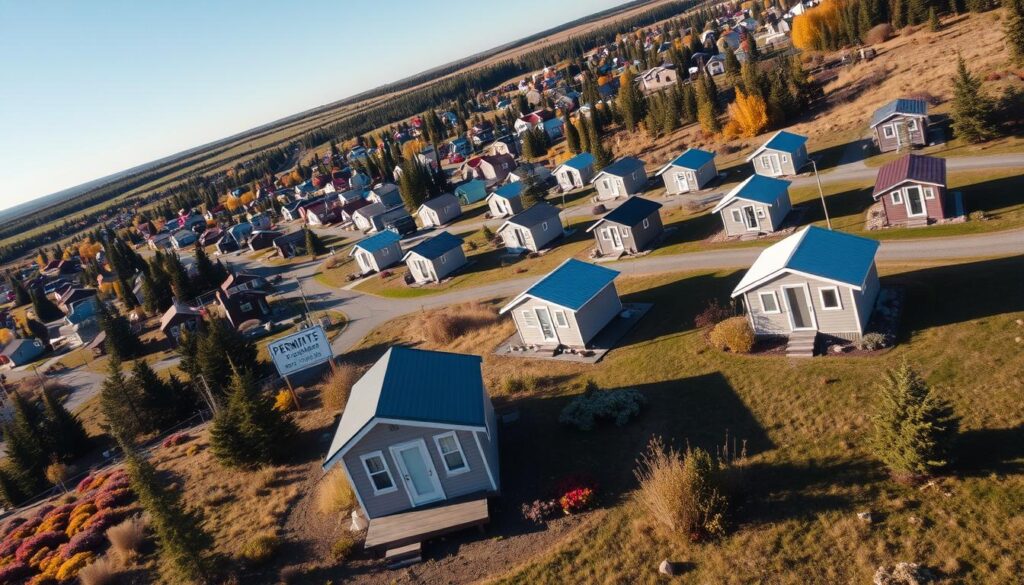
By understanding the permitting requirements and working closely with the appropriate authorities, tiny home enthusiasts in Manitoba can navigate the process and ensure their dream of compact living becomes a reality.
Cost Considerations for Tiny Homes Manitoba
Exploring the cost landscape of tiny homes in Manitoba is crucial for those considering this compact living solution. The price tag can vary significantly, ranging from as low as $8,000 for basic models to upwards of $150,000 for more sophisticated and well-appointed tiny homes. The construction costs, which encompass materials, labor, and any specialized features, are a primary driver of these fluctuations.
Financing a tiny home can present its own set of challenges, as they often fall short of the minimum square footage requirements for traditional mortgages. Chattel mortgages, akin to auto loans, may offer a more viable option for tiny home enthusiasts in Manitoba. Additionally, exploring alternative financing avenues, such as personal loans or crowdfunding, can open up new paths to realizing the dream of tiny home living.
| Cost Factors | Range |
|---|---|
| Basic Tiny Home Models | $8,000 and up |
| Mid-Range and High-End Tiny Homes | $45,000 to $150,000+ |
| Financing Options | Chattel Mortgages, Personal Loans, Crowdfunding |
With a clear understanding of the cost considerations and financing options available, prospective tiny home owners in Manitoba can make informed decisions and take the first steps towards realizing their compact living dreams.
“Embracing the tiny home lifestyle in Manitoba requires careful financial planning, but the rewards of minimalist living can be truly transformative.”
Financing Options for Tiny Homes in Canada
Securing financing for a tiny home in Canada can present unique challenges, as they often do not meet the criteria for traditional mortgages. However, there are alternative financing options available, such as chattel mortgages, which are similar to auto loans and are commonly used for mobile homes and other small structures. These types of loans allow tiny home owners to borrow the funds needed to purchase or build their compact living space, with the home itself serving as collateral.
In addition to chattel mortgages, tiny home financing in Canada can also include RV loans, personal loans, lines of credit, and home equity options. These alternative financing solutions often come with lower interest rates and more flexible terms, making them more accessible for those interested in the tiny home lifestyle.
| Financing Option | Key Features | Advantages |
|---|---|---|
| Chattel Mortgages | Loans for mobile homes and small structures, with the home as collateral | Lower interest rates, suitable for movable tiny homes |
| RV Loans | Lump-sum payments, with the tiny home as collateral | Flexible terms, often with no money down options |
| Personal Loans | Versatile use of funds, but may have higher interest rates | Accessible for those who don’t qualify for traditional mortgages |
| Home Equity Loans | Use the equity in your primary home as collateral | Lower interest rates, can be used for tiny home construction |
Exploring these specialized financing solutions is essential for those interested in making the transition to tiny home living in Manitoba and throughout Canada. By understanding the available options, aspiring tiny home owners can make an informed decision and secure the necessary funds to turn their compact living dreams into reality.
tiny homes manitoba: Indigenous Partnerships and Initiatives
In Manitoba, innovative partnerships and initiatives are leveraging the potential of tiny homes to address housing challenges faced by Indigenous communities. Idle No More, a grassroots Indigenous movement, has collaborated with Mini Homes of Manitoba, a local company specializing in compact, sustainable homes, to construct a tiny home for a family on the Big River First Nation in Saskatchewan. The “One House Many Nations” campaign aims to raise awareness about the housing crisis in First Nations communities and provide affordable, culturally appropriate housing solutions.
These collaborations demonstrate the ways in which tiny homes can be integrated into Indigenous-led solutions to improve living conditions and promote self-determination. Winnipeg-based Ma Mawi Chi Itata Centre has developed a 22-unit tiny home community called Astum Api Niikinaahk, offering self-contained housing units with amenities and a separate building for cultural activities, celebrations, and teachings.
The Astum Api Niikinaahk project is a response to the disproportionate homelessness experienced by Indigenous individuals in Winnipeg, with close to 70% of participants in a 2022 Point-in-Time Street Census identifying as First Nations, Indigenous, Metis, or Inuit. Organizations like End Homelessness Winnipeg emphasize the importance of affordable housing and suitable support services in addressing homelessness among Indigenous populations.
Furthermore, the Government of Canada’s Indigenous Homes Innovation Initiative has approved two proposals submitted by the Manitoba Metis Federation (MMF), including the “Ronald McDonald Charity House” concept and the Infinity House of Hope – Mazoun transitional home. These projects, such as Michif Manor and Mazoun, aim to provide affordable, culturally appropriate housing solutions for Metis youth and families, demonstrating the commitment to Indigenous-led initiatives in Manitoba.
“These collaborations demonstrate the ways in which tiny homes can be integrated into Indigenous-led solutions to improve living conditions and promote self-determination.”
Tiny House Villages: A Solution to Homelessness in Manitoba
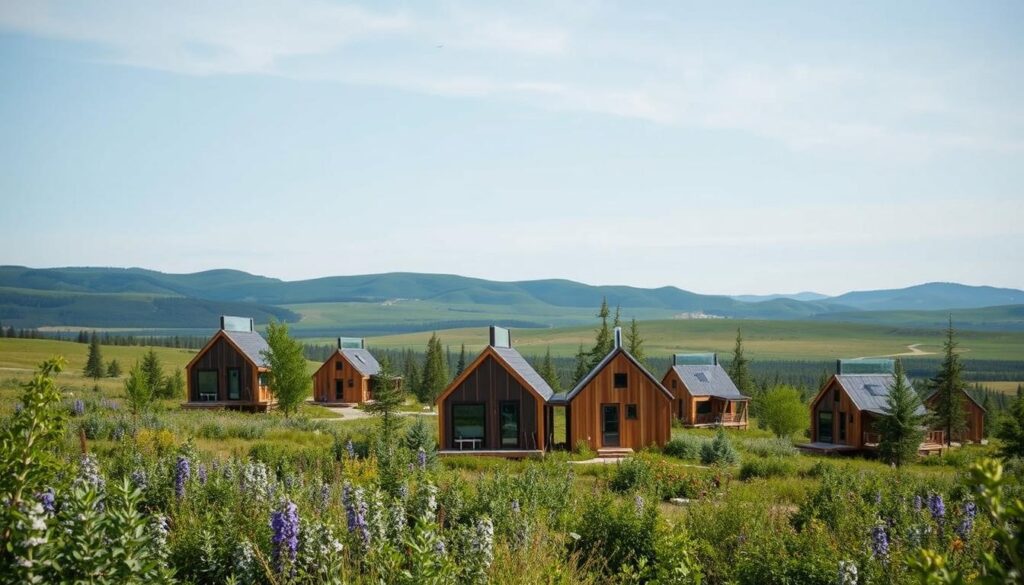
In Winnipeg, Manitoba, a groundbreaking initiative called Astum Api Niikinaahk, or “come sit at our home” in Michif, is providing a unique solution to address the pressing issue of homelessness in the city. This innovative tiny home village, the first of its kind in Winnipeg, features 22 bachelor-style units, four of which are fully accessible for individuals with mobility challenges.
The project, overseen by the Ma Mawi Wi Chi Itata Centre, a respected community service provider, aims to offer stable, culturally appropriate housing while also providing holistic support services to the residents. These services include mental health, addiction, medical, and cultural programming, all designed to empower and uplift the community.
Astum Api Niikinaahk: Winnipeg’s First Tiny Home Village
Astum Api Niikinaahk represents a groundbreaking approach to tackling homelessness, particularly among the Indigenous population in Manitoba. By creating a supportive, community-driven environment through the use of tiny homes, the village provides a sense of belonging and security that is often lacking for those experiencing housing insecurity.
- The Ma Mawi Wi Chi Itata Centre, a leading community service provider, oversees the Astum Api Niikinaahk tiny home village.
- The village offers 22 bachelor-style units, with 4 fully accessible units for individuals with mobility challenges.
- Residents have access to a range of support services, including mental health, addiction, medical, and cultural programming.
- The village’s design and programming are grounded in Indigenous values and informed by the clan system, fostering a sense of community and belonging.
Assiniboine Credit Union, a key supporter of the project, has donated $10,000 to the Astum Api Niikinaahk initiative. The credit union recognizes the critical role that organizations like Ma Mawi Wi Chi Itata play in addressing systemic barriers to housing and supporting truth and reconciliation efforts, poverty reduction, and community building.
| Funding Sources | Amount |
|---|---|
| National Housing Strategy’s National Housing Co-Investment Fund | $4.35 million |
| Reaching Home: Canada’s Homelessness Strategy | $2.95 million |
| Assiniboine Credit Union Donation | $10,000 |
The success of the Astum Api Niikinaahk tiny home village in Winnipeg demonstrates the transformative potential of tiny home communities in addressing homelessness and providing a pathway to stability and self-sufficiency for vulnerable populations, particularly Indigenous individuals and families.
Advantages and Challenges of Tiny Home Living
Tiny home living offers a range of advantages for those seeking a more minimalist lifestyle and a chance to downsize. These compact dwellings provide increased mobility, allowing residents to explore different locations and live with only the essentials. Additionally, tiny homes often come with lower construction and maintenance costs, making them an attractive option for those looking to reduce their financial burden.
However, tiny home living also presents certain challenges. The reduced storage space can be a significant hurdle, as residents must carefully curate their belongings to fit within the limited square footage. Additionally, strict zoning rules in many areas can make it difficult to find suitable locations to park or place a tiny home, and securing financing for these unconventional structures can also be a barrier, particularly for homes not built on a permanent foundation.
Understanding both the advantages and challenges of tiny home living is crucial for anyone considering this lifestyle in Manitoba. By weighing the pros and cons, individuals can make an informed decision that aligns with their personal needs and preferences, ensuring a fulfilling and sustainable tiny home experience.
“Tiny homes offer a chance to live more intentionally and focus on what truly matters, but they also come with unique hurdles that require careful consideration.”
Conclusion
The tiny homes movement in Manitoba is gaining momentum as more homeowners seek out affordable, eco-friendly, and minimalist living solutions. While the legal and practical considerations around tiny home living in the province are still evolving, the numerous benefits of this compact and mobile lifestyle are becoming increasingly apparent. From reduced costs and increased mobility to a focus on only the essentials, tiny homes offer an attractive option for those looking to downsize and embrace a more sustainable way of living.
Through innovative partnerships and initiatives, such as the Astum Api Niikinaahk tiny home village in Winnipeg, the potential of tiny homes to address housing challenges, particularly in Indigenous communities, is also being explored. As the tiny homes trend continues to grow in Manitoba, it will be crucial for local regulations and zoning laws to adapt to support this emerging way of living.
Overall, the tiny homes movement in Manitoba presents a compelling solution for those seeking compact living solutions, sustainable housing, and a minimalist lifestyle. As the trend continues to evolve, it will be essential for the province to create a supportive environment that allows tiny home enthusiasts to thrive and contribute to a more sustainable future.