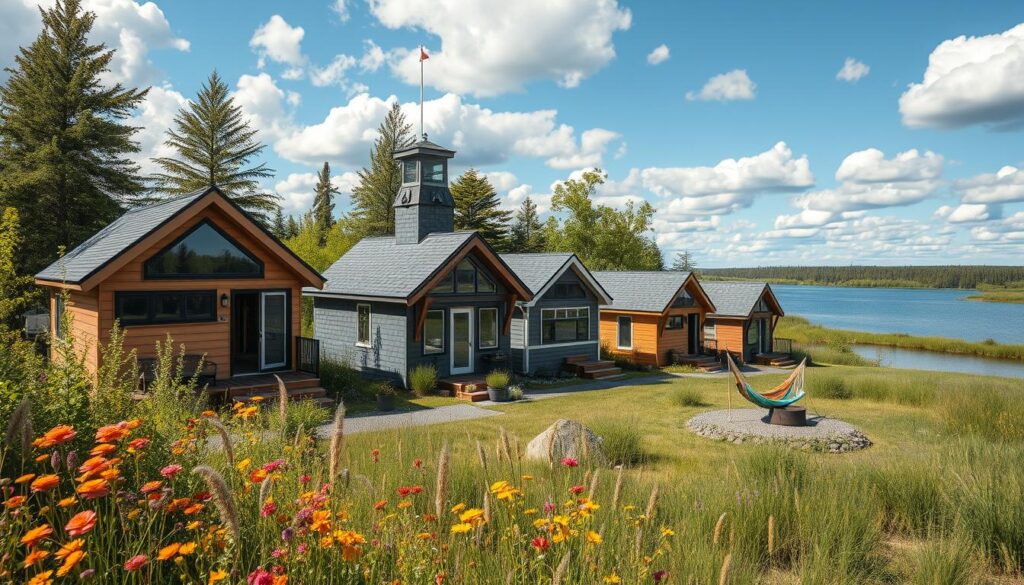
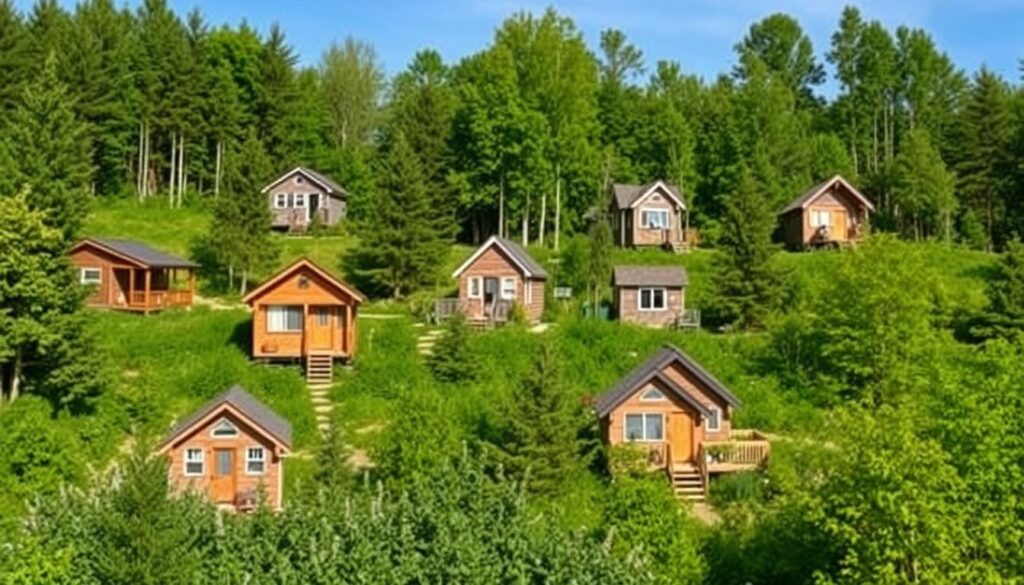
In the heart of Winnipeg, a quiet revolution is unfolding. Amidst the bustling streets, a unique project is offering a cozy and affordable solution to a pressing issue – providing transitional housing for veterans facing homelessness. The Astum Api Niiknaahk project, which means “Our Home” in the local Ojibwe language, has introduced 22 tiny house units, each measuring a compact yet comfortable 170 square feet, to downtown Winnipeg.
The idea of tiny homes has been gaining traction in Winnipeg, as experts suggest these compact living spaces could help address the city’s housing shortage and provide affordable options for diverse groups, including immigrants. The Astum Api Niiknaahk project represents a pioneering step in this direction, with a focus on supporting veterans who have served their country and now face the challenge of finding a stable and comfortable place to call home.
Key Takeaways
- The Astum Api Niiknaahk project in Winnipeg has introduced 22 tiny house units for veterans facing homelessness.
- Each tiny home is 170 square feet, with four units designated for individuals in wheelchairs at 400 square feet.
- Tiny homes are being explored as a potential solution to Winnipeg’s housing shortage and to provide affordable living options.
- The minimum square footage required for a tiny home in Canada is 188 square feet.
- Homes for Heroes, a national initiative, plans to expand its Veteran Village concept to Winnipeg and other major Canadian cities.
The Rise of Tiny Homes in Winnipeg
While Winnipeg may not be the first city that comes to mind when thinking about the tiny home trend, this innovative concept is slowly making its way to the prairies. The idea of living in compact, efficient spaces is capturing the attention of residents, particularly those seeking affordable and sustainable housing options.
Exploring the Growing Trend
Although the tiny home movement is not yet widespread in Winnipeg, the city is starting to see a gradual increase in interest. Experts believe that tiny homes could provide a viable solution for affordable housing, appealing to sectors such as immigrants, retirees, and young professionals. However, the city still faces some initial challenges in navigating the zoning laws and financing hurdles that come with this emerging trend.
Overcoming Initial Challenges
One of the primary obstacles facing the tiny home trend in Winnipeg is the need to adapt existing regulations and bylaws to accommodate this new style of living. Zoning laws, building codes, and financing options will all need to be re-evaluated to ensure that tiny homes can be integrated into the city’s housing landscape. Despite these initial challenges, city officials and community organizations are actively exploring ways to support and promote the growth of tiny homes in Winnipeg.
| Tiny Home Trend in Winnipeg | Tiny Home Regulations in Winnipeg | Tiny Home Challenges in Winnipeg |
|---|---|---|
| The tiny home trend is slowly gaining traction in Winnipeg, with the city seeing a gradual increase in interest from residents. | Winnipeg’s current zoning laws and building codes do not yet fully accommodate tiny homes, presenting regulatory hurdles that need to be addressed. | Financing options for tiny homes in Winnipeg can be limited, and the city must find ways to support and promote this emerging housing trend. |
Pros and Cons of Tiny Home Living
While the tiny home movement has gained popularity in Winnipeg, it’s important to explore both the benefits and drawbacks of this unique living situation. Tiny homes offer a compact and cozy living space, typically including a bedroom, bathroom, kitchen, and living room. However, this compact size can also present some challenges for those considering tiny home living in Winnipeg.
Compact and Cozy: The Benefits
One of the primary benefits of tiny homes in Winnipeg is their affordability. Tiny homes are generally less expensive to purchase and maintain than traditional single-family homes, making them an attractive option for those looking to reduce their housing costs. Additionally, the compact size and efficient design of tiny homes can lead to lower utility bills and a smaller environmental footprint.
Another key benefit of tiny home living in Winnipeg is the simplicity and flexibility it offers. With less square footage to maintain, tiny home owners can enjoy a more minimalist lifestyle, focusing on the essentials and reducing clutter. This can lead to increased feelings of freedom and a greater sense of well-being.
Drawbacks of Tiny Home Living
While the benefits of tiny homes in Winnipeg are undeniable, there are also some potential drawbacks to consider. The limited storage and entertainment space in tiny homes may not appeal to everyone, particularly those with larger families or who enjoy hosting guests. Additionally, the zoning regulations and financing challenges associated with tiny homes can make it difficult for some individuals to acquire and legally site these unique dwellings.
Despite these potential drawbacks of tiny homes in Winnipeg, the affordability and simplicity of tiny home living continue to attract the interest of some residents. As the tiny home trend continues to evolve, it will be interesting to see how the city of Winnipeg and its residents adapt to this innovative and space-efficient housing option.
Tiny Homes for Veterans Winnipeg: A Supportive Solution
In the ongoing effort to address homelessness among Canadian military veterans, Winnipeg has introduced a promising initiative – the Astum Api Niiknaahk project. This tiny homes project aims to provide 22 units of 170 square feet (with some larger units for those in wheelchairs) to offer shelter and support for formerly homeless individuals, many of whom are veterans.
The Astum Api Niiknaahk Project
The Astum Api Niiknaahk project faced some initial delays due to the COVID-19 pandemic, but it is now providing a safe, secure, and healing environment for its residents as they transition back to civilian life. This innovative approach to transitional housing for tiny homes for veterans winnipeg is part of a growing movement to support those who have served our country.
Providing Shelter and Support
The astum api niiknaahk project winnipeg is designed to offer more than just a roof over their heads. Residents receive access to on-site social workers and a range of support services to help them reintegrate into society. Through this transitional housing for veterans winnipeg, veterans can find the stability and resources they need to reclaim their independence and rebuild their lives.
“The tiny homes in the Edmonton village are approximately 300 square feet each, with amenities such as a bedroom, kitchen, bathroom, and living area.”
The success of similar tiny homes for veterans winnipeg projects, like the Homes for Heroes initiative in Alberta, has demonstrated the positive impact of this approach. By providing a secure and supportive environment, these programs empower veterans to overcome the challenges they face and pave the way for a brighter future.
Addressing Affordable Housing Needs
Experts believe that the development of tiny homes in Winnipeg could offer a potential solution to the city’s affordable housing shortage. These compact living spaces could be a suitable option for immigrants who have recently relocated to Winnipeg, providing them with temporary shelter until they can establish themselves and find a permanent place to live. However, the tiny home concept may not be as well-suited for families, as the limited square footage is typically designed for one or two individuals. The affordable housing challenge in Winnipeg remains, particularly for larger households.
A Potential Solution for Immigrants and Families
The Astum Api Niikinaahk project, a 22-unit tiny home community developed by the Ma Mawi Wi Chi Itata Centre, has been a positive step towards addressing the housing needs of Indigenous individuals in Winnipeg. With 4 units designed for individuals with disabilities, this initiative has demonstrated the viability of tiny homes as a transitional housing solution. Additionally, the province of Manitoba has made efforts to increase investments in addressing chronic homelessness, including the creation of a 20-unit tiny home village for homeless veterans in 2021/22.
However, the challenges of affordable housing in Winnipeg extend beyond the Indigenous community. Manitoba’s rising cost of living has disproportionately affected lower-income residents, necessitating further action to provide accessible and suitable housing options for immigrants and families. While tiny homes may not be the perfect fit for larger households, they could serve as a temporary bridge to more permanent, affordable housing solutions.
| Statistic | Value |
|---|---|
| Tiny home units for transitional housing | 22 |
| Bachelor-style units (170 sq ft) | 18 |
| Accessible units (400 sq ft) | 4 |
| Estimated annual operating costs | $800,000 – $900,000 |
| Funding sources | United Way, End Homelessness Winnipeg, provincial government |
As Winnipeg continues to grapple with the challenge of affordable housing, the exploration of innovative solutions like tiny homes could provide a glimmer of hope for immigrants, families, and other vulnerable populations in need of secure and affordable living spaces.
Tiny Homes for Veterans Winnipeg: Regulations and Requirements
As the tiny home movement continues to gain traction in Winnipeg, it’s important to understand the regulatory landscape that governs these compact dwellings. According to the Homes for Heroes Foundation, tiny homes in Canada must meet specific size requirements, be built on a permanent foundation, and adhere to local bylaws and building codes. In Winnipeg, this includes ensuring the home has access to electricity, heat, and water – essential utilities that must be accounted for during the design and construction process.
Navigating the intricate web of tiny home regulations winnipeg can be a significant challenge for veterans and organizations looking to provide affordable housing solutions. The building codes for tiny homes winnipeg require careful consideration to ensure compliance with safety and livability standards. Furthermore, understanding the legal requirements for tiny homes winnipeg is crucial for securing the necessary approvals and permits to bring these innovative projects to life.
| Regulation | Requirement |
|---|---|
| Minimum Size | 188 square feet |
| Foundation | Permanent, not mobile or wheel-based |
| Utilities | Electricity, heat, and water |
| Building Codes | Adherence to Winnipeg’s specific bylaws |
The development of tiny homes for veterans in Winnipeg must navigate these regulatory hurdles to ensure the safety and well-being of residents. By understanding the tiny home regulations winnipeg, building codes for tiny homes winnipeg, and legal requirements for tiny homes winnipeg, organizations like the Homes for Heroes Foundation can work collaboratively with local authorities to create innovative, sustainable housing solutions that address the unique needs of Canadian Armed Forces members transitioning to civilian life.
Homes for Heroes: A National Initiative
The Homes for Heroes Foundation, a national organization, is dedicated to addressing the pressing issue of homelessness among Canadian military veterans. This laudable initiative has already established successful tiny home villages in Calgary and Edmonton, and is now expanding its reach to other cities, including Winnipeg and Kingston.
The Veterans Village Concept
The Homes for Heroes “Veterans Villages” typically consist of 20 or more tiny homes, each around 300 square feet, providing a supportive community environment for veterans transitioning back to civilian life. These compact yet comfortable dwellings are designed to cater to the unique needs of the veteran population, offering a sense of security and belonging.
Expansion Plans for Winnipeg and Beyond
With the success of its previous projects, the Homes for Heroes Foundation is now focused on expanding its innovative model to other parts of Canada. The organization plans to establish a new village in Winnipeg, aiming to support the estimated 10,000 or more veterans facing homelessness nationwide. By replicating the proven formula of the veterans village concept, Homes for Heroes is poised to make a tangible difference in the lives of tiny homes for veterans Canada.
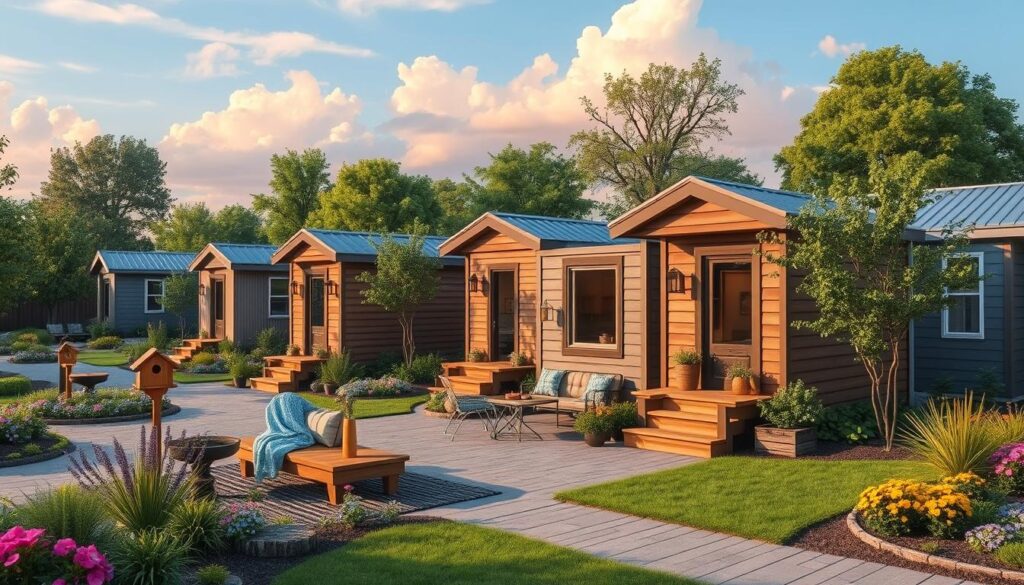
“It takes a village to build a village,” a sentiment that encapsulates the collaborative spirit behind the Homes for Heroes initiative, as they work tirelessly to provide homes for heroes winnipeg and beyond.
The Impact of Transitional Housing
The Astum Api Niiknaahk project and the Homes for Heroes initiatives in Winnipeg have demonstrated the profound impact of transitional housing for veterans. These tiny home communities not only offer shelter but also foster a strong sense of community and belonging, which is crucial for veterans reintegrating into civilian life.
The inward-looking, barrack-style layout of the villages, along with access to essential resources and support services, helps to recreate the supportive environment that veterans are accustomed to from their military service. This targeted approach to transitional housing for veterans in Winnipeg has been a key factor in the success of these initiatives, empowering veterans to regain their independence and thrive within a caring community.
Fostering a Sense of Community
The tiny home villages in Winnipeg have been designed to cultivate a strong sense of community among the veteran residents. By clustering the homes in a close-knit arrangement, the villages promote interaction, mutual support, and a shared sense of camaraderie – attributes that many veterans have come to expect from their military service.
- The villages provide a safe and supportive environment where veterans can connect with one another, share experiences, and find a renewed sense of purpose.
- Access to on-site resources, such as counseling services, job training, and recreational activities, further strengthens the sense of community and helps veterans navigate the transition to civilian life.
- The community-focused approach of these transitional housing initiatives has been instrumental in fostering a sense of belonging and empowerment among the veteran residents.
By prioritizing the creation of a tight-knit, supportive community, the Astum Api Niiknaahk project and the Homes for Heroes initiatives in Winnipeg have demonstrated the profound impact of transitional housing for veterans in addressing the complex challenges faced by this population.
“The community-based approach of these tiny home projects has been a game-changer for veterans in Winnipeg, helping them rebuild their lives and find a renewed sense of purpose.”
Tiny Homes for Veterans Winnipeg: Challenges and Future Outlook
Despite the growing popularity of tiny homes as a solution for affordable and supportive housing for veterans in Winnipeg, the journey has not been without its challenges. Navigating the complex regulatory frameworks and securing adequate funding have proven to be ongoing hurdles for organizations like Homes for Heroes, which spearhead these initiatives.
Furthermore, overcoming the stigma surrounding tiny home living remains a significant obstacle. Some veterans may be hesitant to embrace the limited square and perceived lack of privacy that these compact dwellings offer, particularly for those with families. Addressing these concerns and ensuring the tiny home solutions cater to diverse veteran needs is crucial for the long-term success of these projects.
Yet, the future outlook for tiny homes as a viable option for veterans in Winnipeg remains promising. As the Homes for Heroes initiative and other similar projects continue to expand across the country, they have the potential to make a significant impact on addressing the challenge of veteran homelessness. With the support of the federal government’s Canada Builds initiative and the Housing Accelerator Fund, which aims to unlock 3.87 million new homes by 2031, the challenges of tiny homes winnipeg veterans may gradually be overcome.
Collaboration among all levels of government, non-profit organizations, and the private sector will be essential in ensuring the future of tiny homes winnipeg provides tiny home solutions for veterans winnipeg that cater to their unique needs and preferences. As the housing crisis in Canada continues to evolve, these innovative approaches to affordable and supportive housing may pave the way for a more inclusive and sustainable future for our nation’s veterans.
“The federal government plans to reduce the current level of temporary residents in Canada by about 600,000 to adjust housing demand and affordability.”
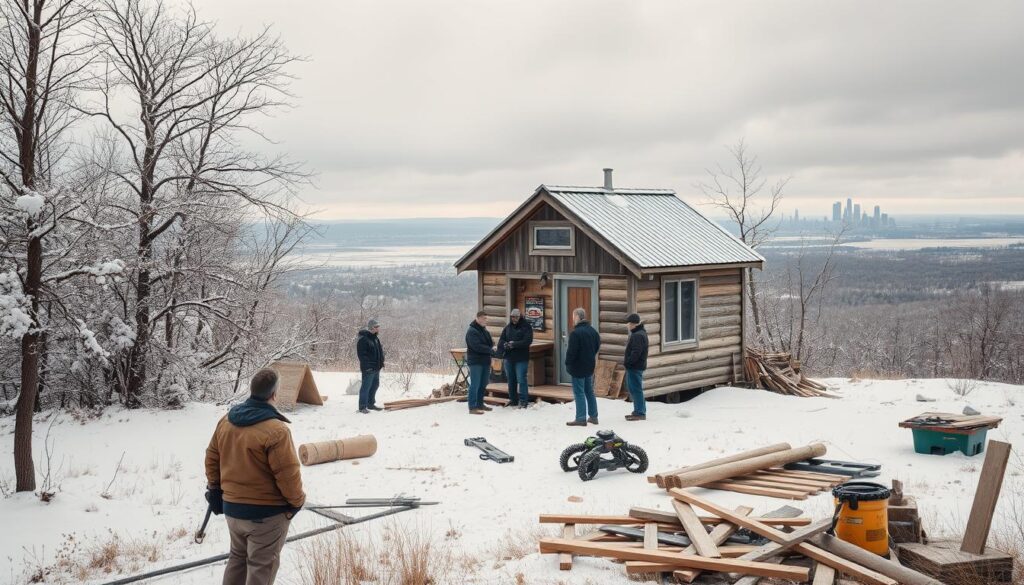
Despite the challenges, the future remains promising for tiny homes as a solution for affordable and supportive housing for veterans in Winnipeg. With continued collaboration and the support of government initiatives, these innovative projects have the potential to make a lasting impact on the lives of our nation’s heroes.
Conclusion
The emergence of tiny homes in Winnipeg as a solution for affordable and supportive housing for veterans is a promising development. These compact yet comfortable living spaces offer a viable option for providing shelter and transitional support to those who have served our country. While the tiny home movement in Winnipeg is still in its early stages, facing regulatory and financing challenges, the potential impact on addressing veteran homelessness is substantial.
As initiatives like Homes for Heroes continue to expand, the future outlook for tiny homes as a solution for Winnipeg’s veterans remains optimistic. By fostering a sense of community and providing access to essential resources, these tiny home projects can make a meaningful difference in the lives of those who have sacrificed so much for our nation. The tiny home solutions in Winnipeg offer a promising approach to addressing the affordable housing needs and supporting the transition for veterans in our community.